
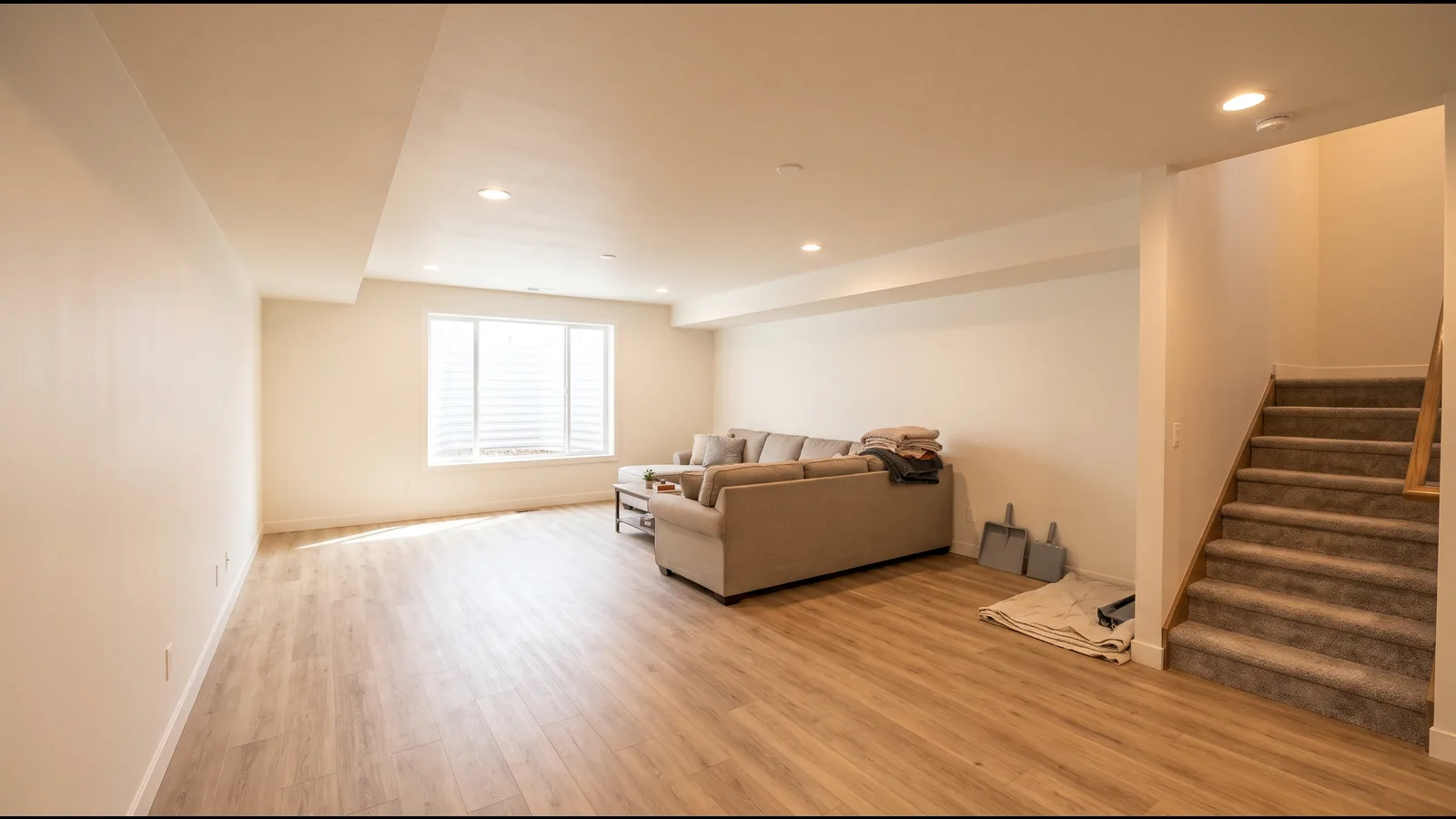
Basement Stair Types for Pueblo Homes
For the five stair jobs below, Fixr's cost table runs from $900 to $6,000 including labor. The figures are 2022 data, so check a current written quote against them.
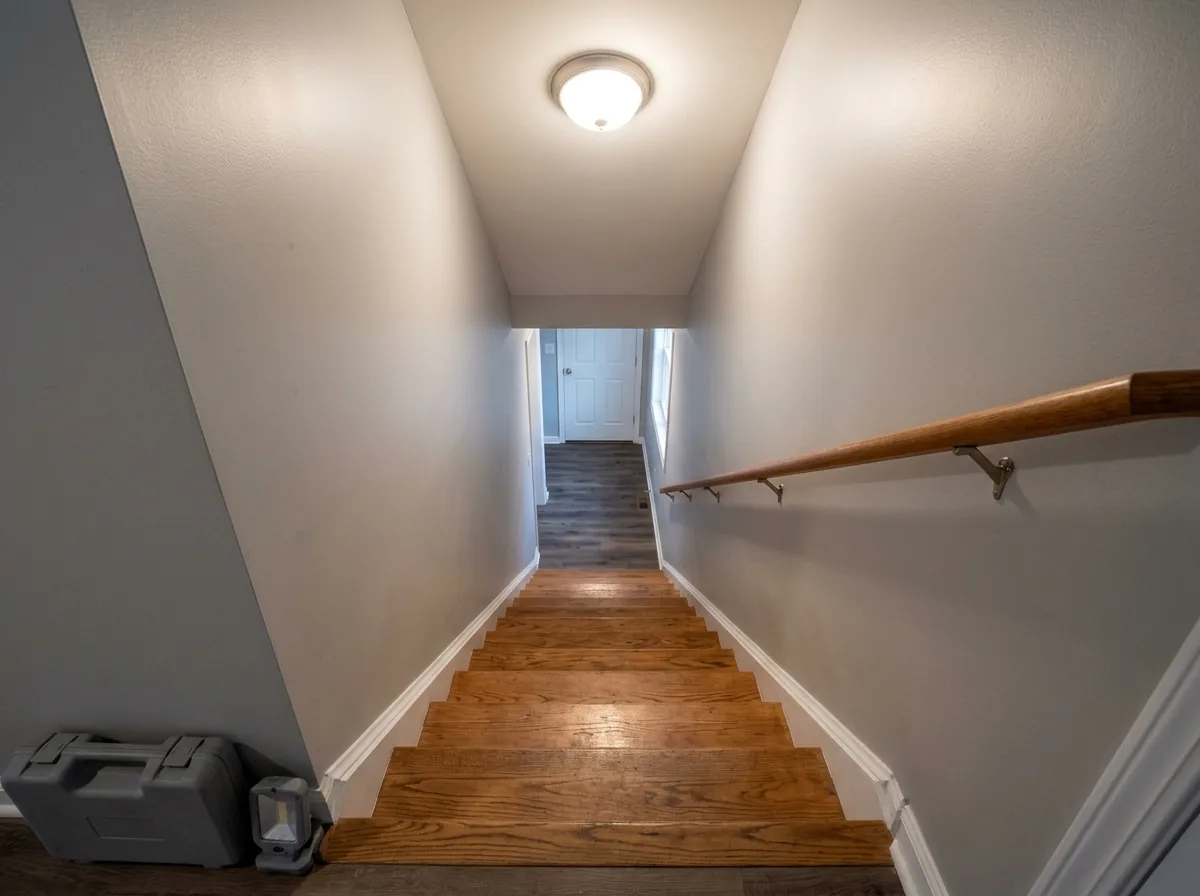
Straight-Run Stairs
Fixr says most basement stairs are straight because it is the simplest type to design and cost-effective to install.
- Cost: $960 to $1,920 including labor, in Fixr's table.
- Typical size: 13 to 15 steps, 3 to 5 ft wide.
- Height limit: a single flight may rise no more than 12 ft 7 in between floors or landings.
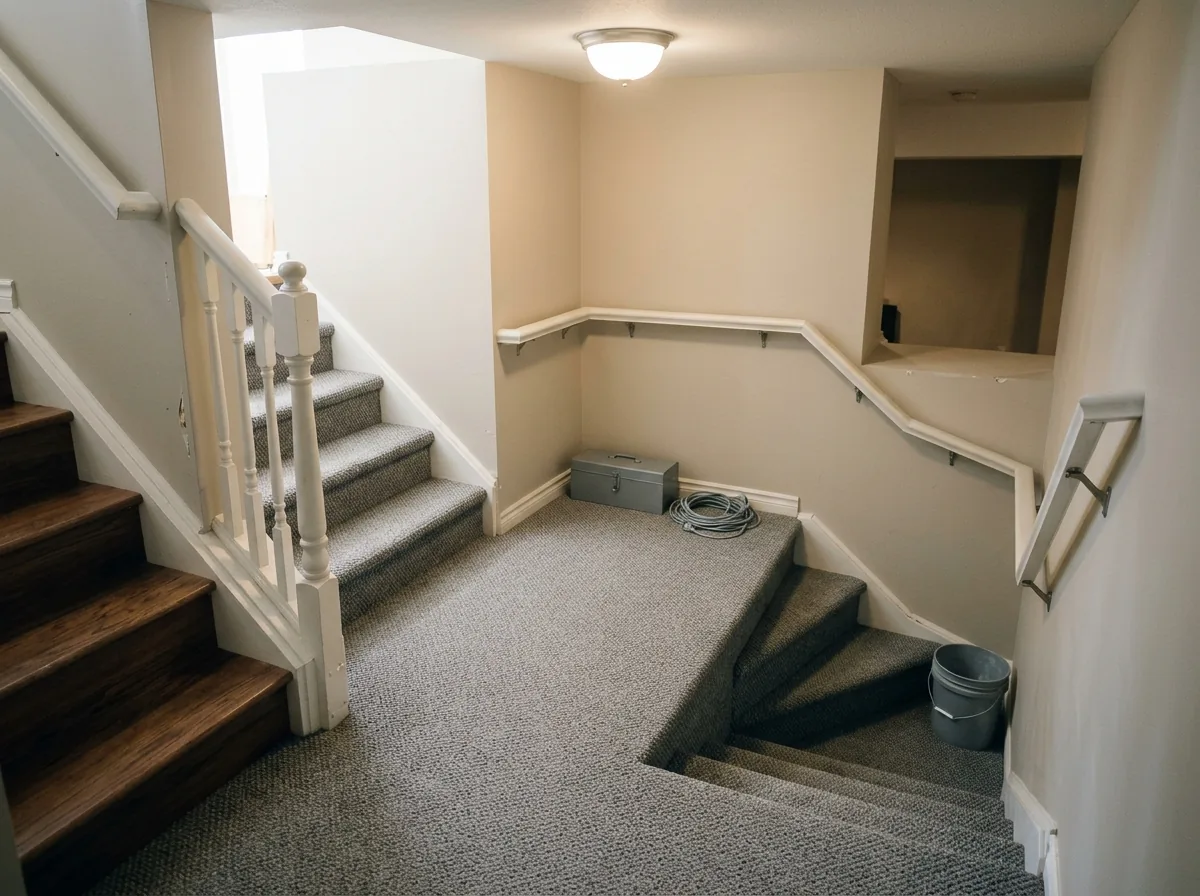
L-Shaped and U-Shaped Stairs With a Landing
A 90-degree turn makes an L, a 180-degree turn makes a U, and both turn at a flat landing. Fixr calls both safer than a straight stair because the turn happens at a landing.
- Cost: $900 to $4,000 each, in Fixr's table.
- Landing: the 2021 IRC sets its width at no less than the flight it serves.
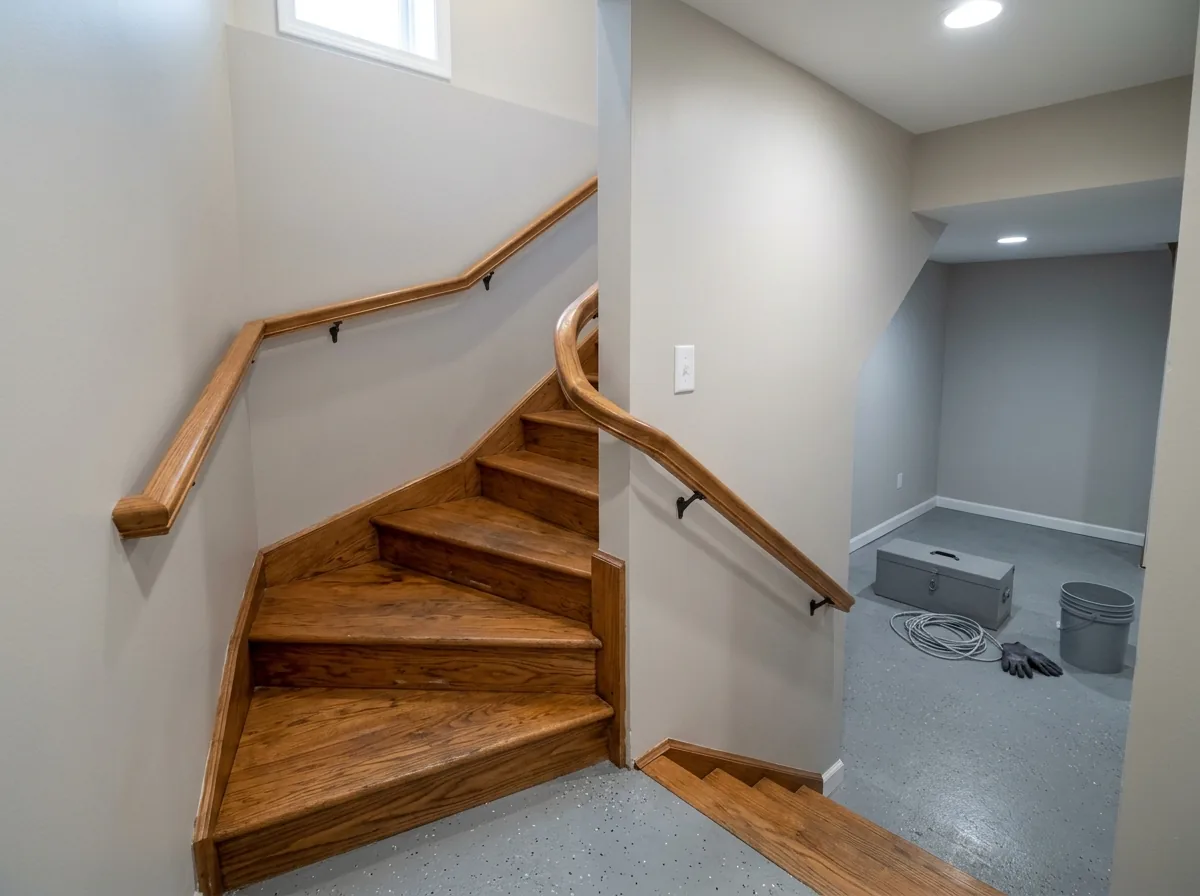
Winder Stairs
Winders turn the corner on wedge-shaped treads instead of a flat landing. Fixr counts them as the more decorative option.
- Cost: $1,800 to $6,000, in Fixr's table.
- Tread rule: at least 10 in deep where they cross the walkline, 12 in from the inside of the turn, and at least 6 in at any point.
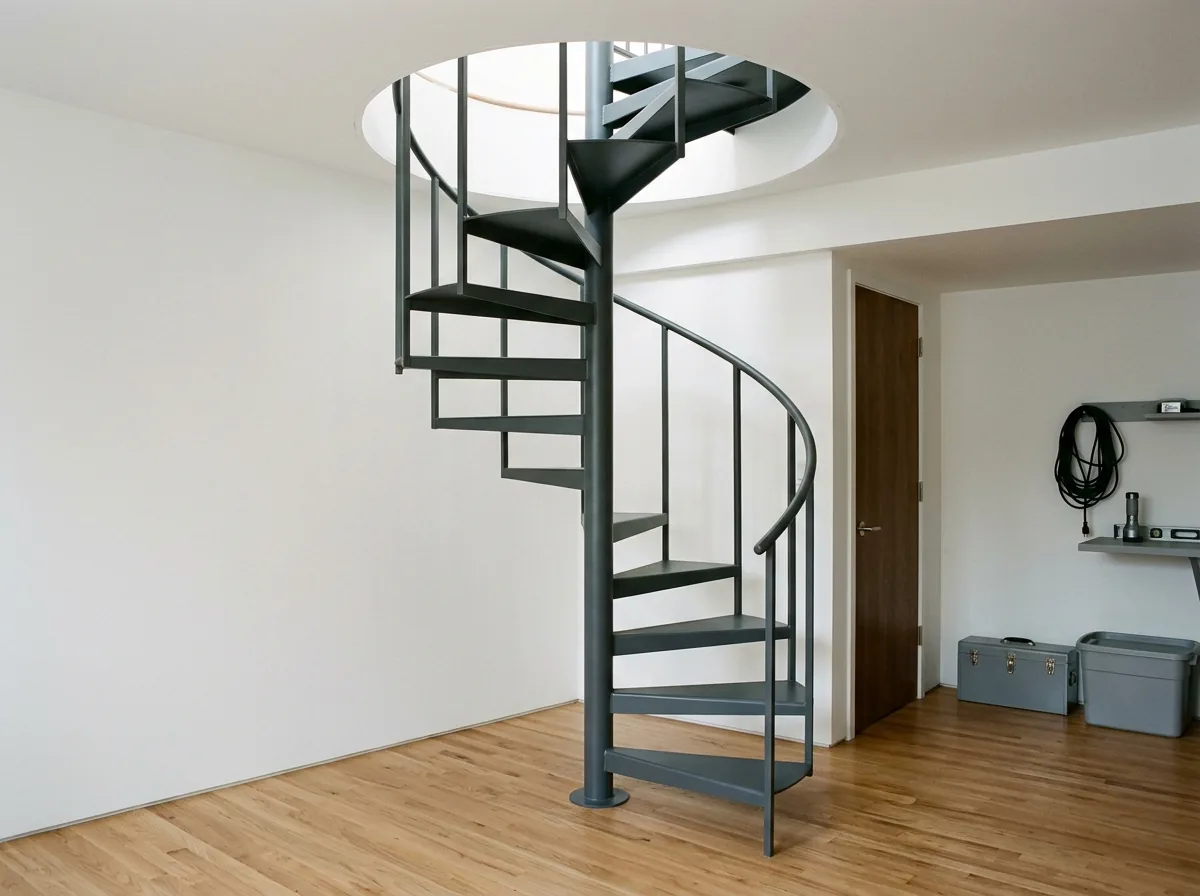
Spiral Stairs
Fixr calls spiral stairs the most space-efficient way into a basement. They are usually sold as one unit.
- Cost: $1,800 to $5,000, in Fixr's table.
- Code: 26 in clear width, 6-3/4 in treads at the walkline, risers up to 9-1/2 in and 6 ft 6 in of headroom.
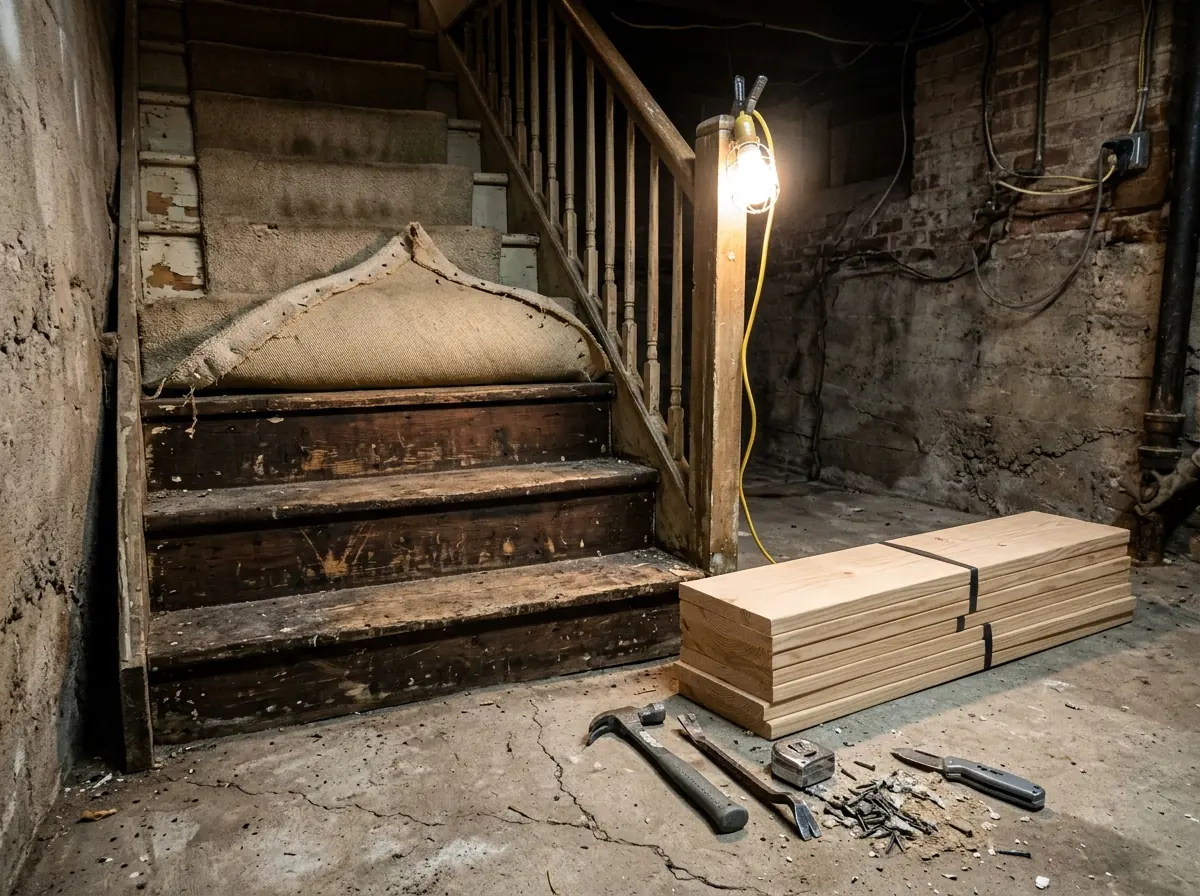
Replacing or Refinishing Old Stairs
About 72% of Pueblo's homes were built before 1980, so many basement stairs went in long before the 2021 IRC rules below.
- Tear-out: $2,500 to $4,000 for demolition, plus $3,000 to $5,000 for a new straight wood stair built by pros.
- Paint and carpet: about $1,300 for a stairwell.
- Refinish wood treads: $5 to $8 per sq ft.
- Move the stair: $700 to $2,000.
Why Pueblo homeowners call Pueblo Basement Finishing
- Free to call or send the form
- One local contractor gets your request, not a bidding list
- Ask for each trade and the permit fee as its own line
- Tie payments to passed inspections, the last one to the final
Basement Stair Code in the 2021 IRC
Section R311.7 of the 2021 IRC, the edition SoCoBD uses, covers basement stairs. A finished basement's staircase has to meet these numbers:
R311.7 stairways
Width
36 in clear above the handrail; at and below it, 31-1/2 in with a rail on one side or 27 in with rails on both.Landings
a floor or landing at the top and bottom, as wide as the flight, and at least 36 in deep on a straight run.Headroom
6 ft 8 in, measured from the line of the tread nosings.Risers and treads
risers up to 7-3/4 in, treads at least 10 in, and no more than 3/8 in variation within a flight.Nosings
3/4 to 1-1/4 in, unless treads are 11 in or deeper.Handrails
on at least one side at 4 or more risers, 34 to 38 in high, 1-1/2 in off the wall, continuous for the full flight, and 1-1/4 to 2 in across if round.
R312 guards and R303.7 lighting
Guards
needed where the open side of a stair or landing is more than 30 in above the floor below. They stand 34 in high along the stair (36 in at landings and floors), with gaps that stop a 4-3/8 in sphere on the stair side.Lighting
treads and landings lit to at least 1 footcandle, with a wall switch at each floor level when the stair has 6 or more risers (basement lighting).Fireblocking
between the stringers at the top and bottom of the run (basement framing).
Basement Stairs on Pueblo's Swelling Clay
The Colorado Geological Survey lists stairs among the things to keep separate from a floating basement slab, along with partition walls and utilities. Pueblo sits on those swelling soils. If the slab heaves, a stair fixed to it moves with it, so ask how the bottom of the stair will meet the floor.
Fixr notes that moving a stair can need a building permit, and in the City of Pueblo that comes from SoCoBD (how SoCoBD permits work). Ask for the riser height, tread depth and headroom on the drawing before work starts.