
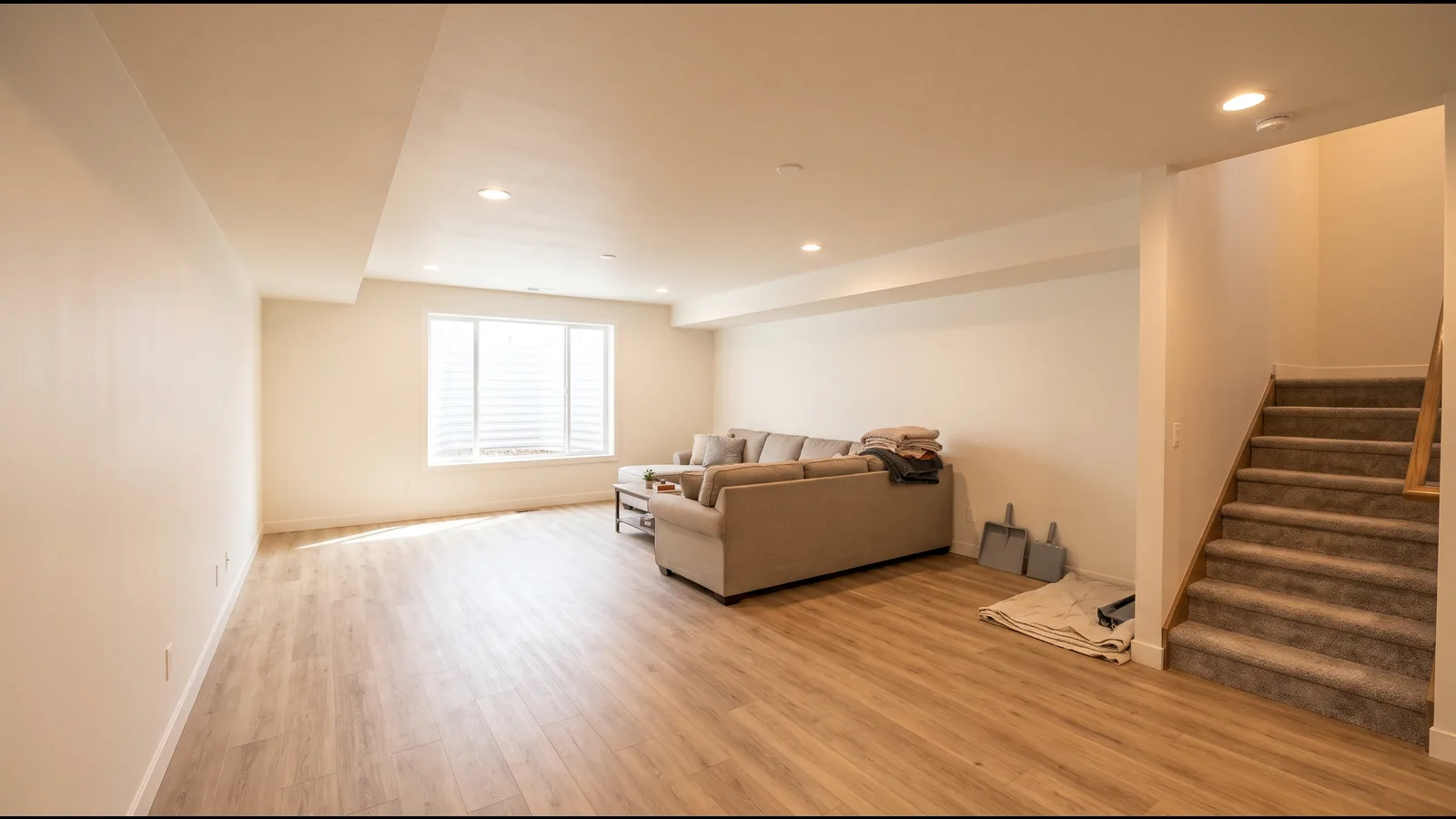
Basement Renovation Projects in Already-Finished Basements
A renovation starts with what's already there, so the first walk-through is partly an inspection of the old finish. These are the common project types, and each has its own cost and paperwork.
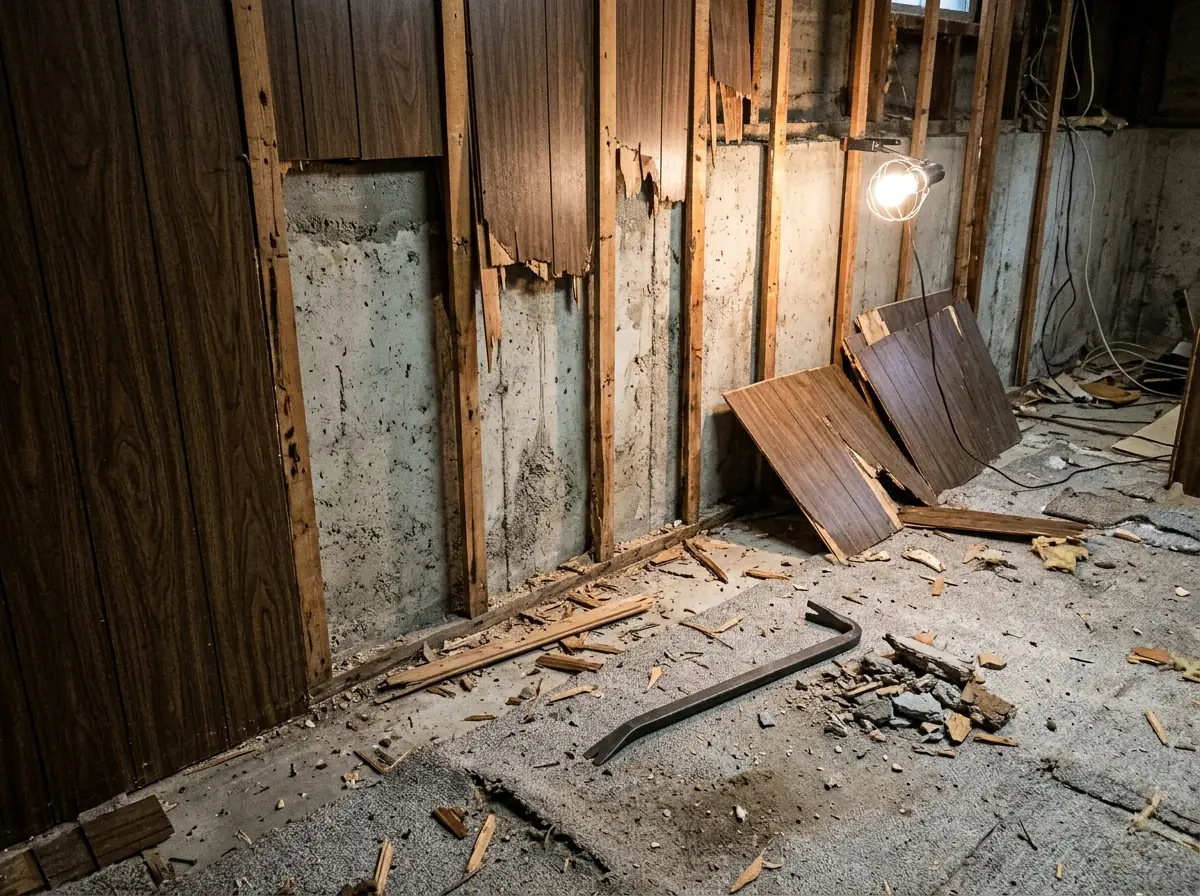
Paneling, Drop Ceiling and Carpet Tear-Out
Old paneling, sagging ceiling tiles and worn carpet come out first. In a house built before 1978, paid demolition of painted surfaces falls under EPA's lead-safe rule regardless of square footage. Old ceilings and insulation can carry asbestos risk as well.
- Asbestos testing: $250 to $850 (HomeGuide), worth doing for popcorn ceilings and vermiculite insulation
- Lead paint removal, if testing finds it: $6 to $17 per sq ft
- Disposal and cleanup: ask for them as their own line
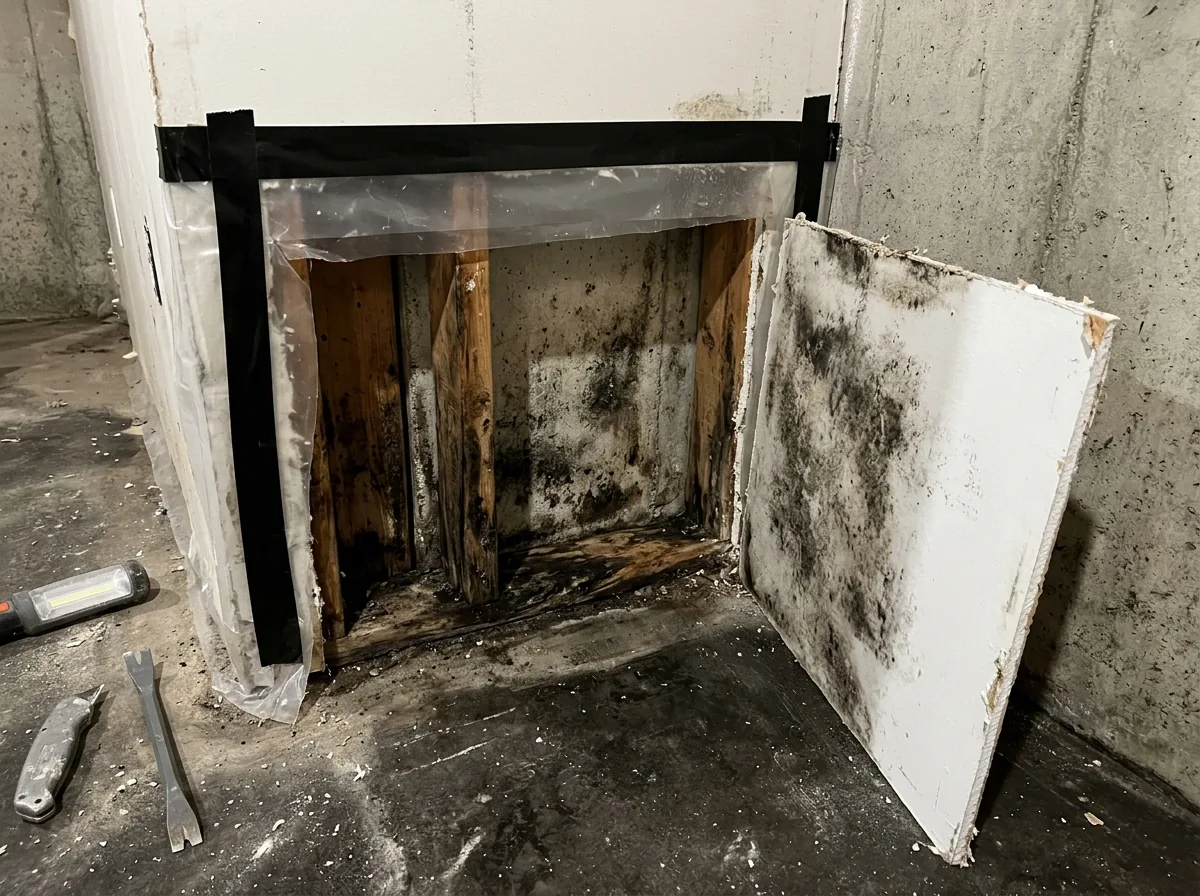
Mold and Water-Damage Repair
Tear-out can uncover staining where water got behind the old finish. HomeGuide prices remediation at $15 to $30 per sq ft, $1,500 to $6,000 for a typical job, and up to $15,000 for a whole basement.
- Time: 1 to 3 days for small and medium areas, up to 7 for severe growth
- Find the water source before anything new goes up (moisture control)
- Ask whether the quote covers testing, removal and the new drywall, or only the cleanup
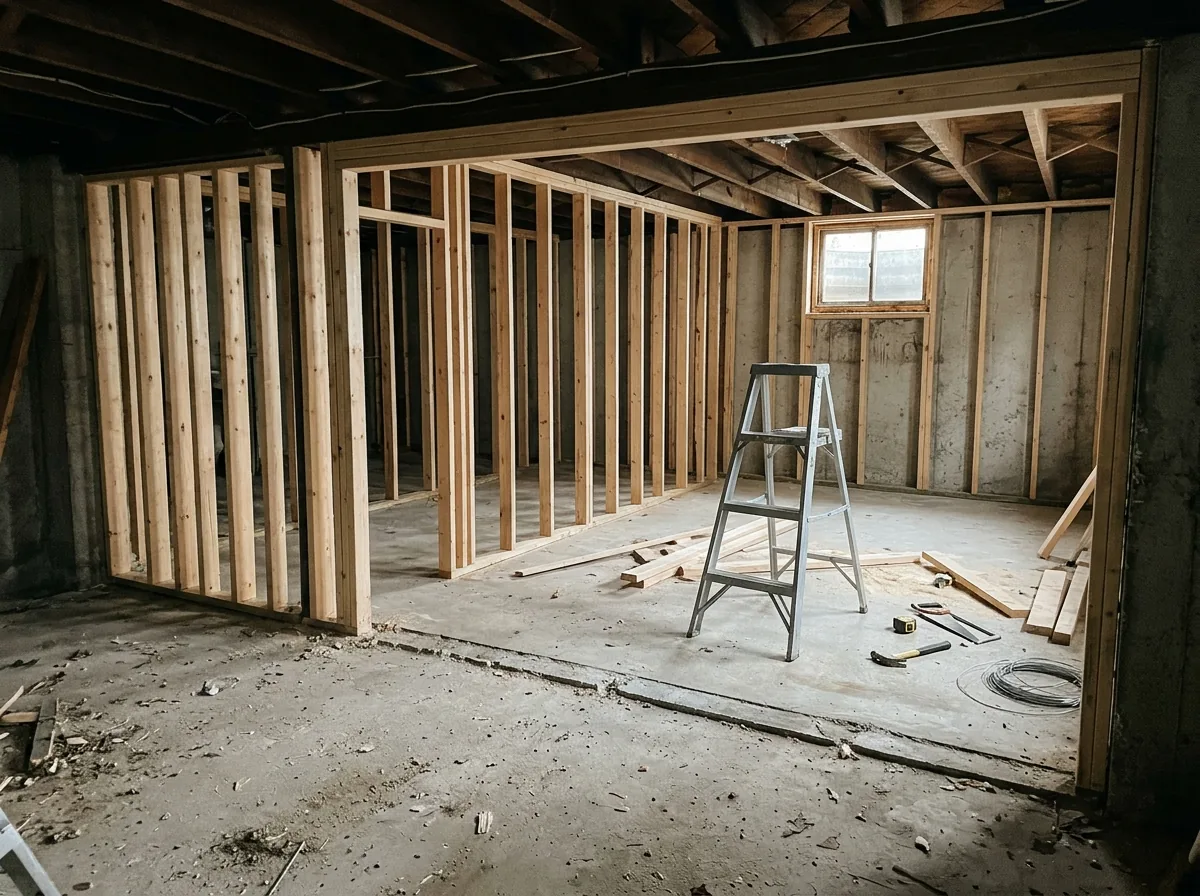
Layout Changes and New Rooms
Taking out a wall, adding a bedroom or opening a dark hallway into the family room changes the floor plan, and SoCoBD treats that as an alteration. Its fee sheet values interior wall changes at half the new-finish rate.
- Valuation: $176 per sq ft x 50% for an altered existing basement
- New bedroom: needs its own egress opening (egress sizes)
- Plans: a scaled floor plan with every room's use labeled
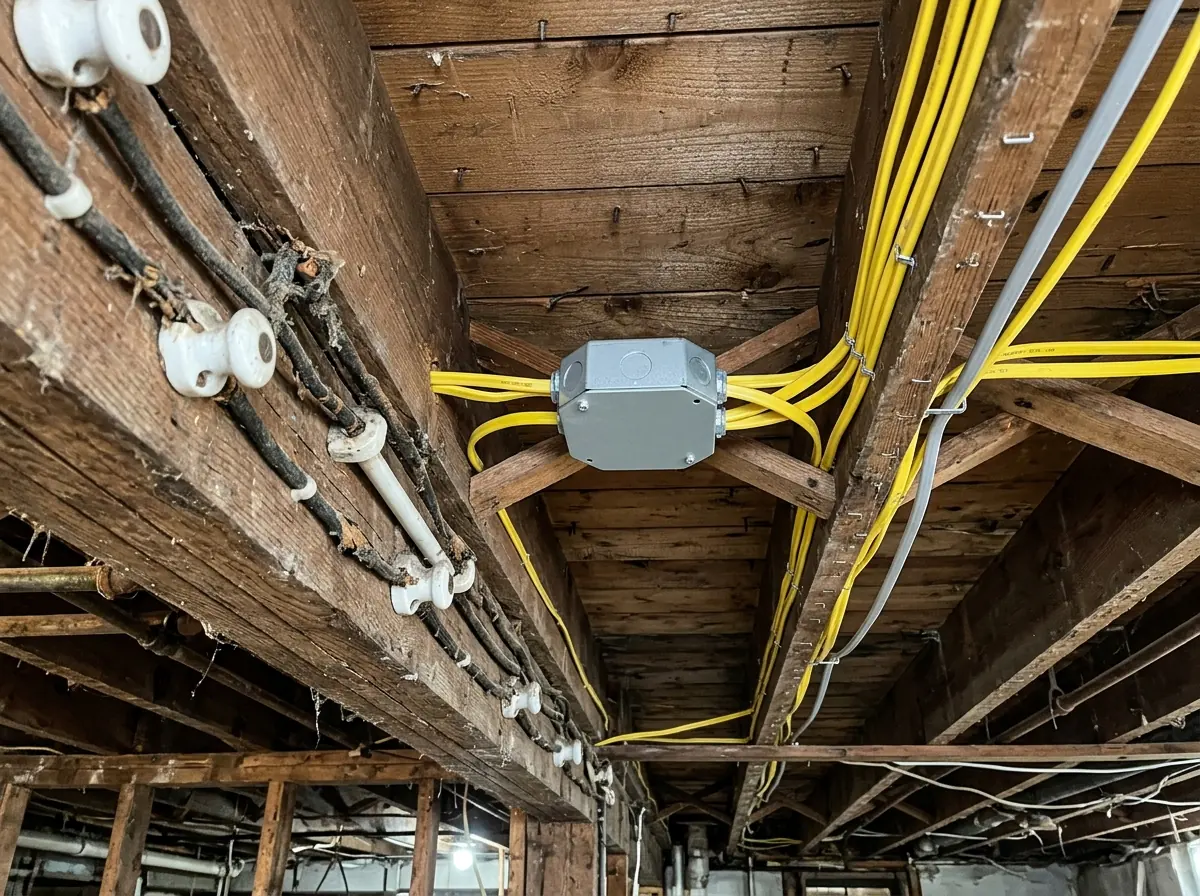
Wiring, Alarms and Code Catch-Up
A basement finished decades ago may have wiring and alarms that predate current code. Once a permit is pulled, the 2021 IRC brings smoke and CO alarms up to new-home locations throughout the house, and SoCoBD says CO detectors are required whenever work is done inside (alarm locations).
- Electrical permit: separate from the building permit, $50 attachment fee
- Code: SoCoBD enforces the 2023 National Electrical Code
- Payment: SoCoBD advises against any final electrical payment until the inspection passes
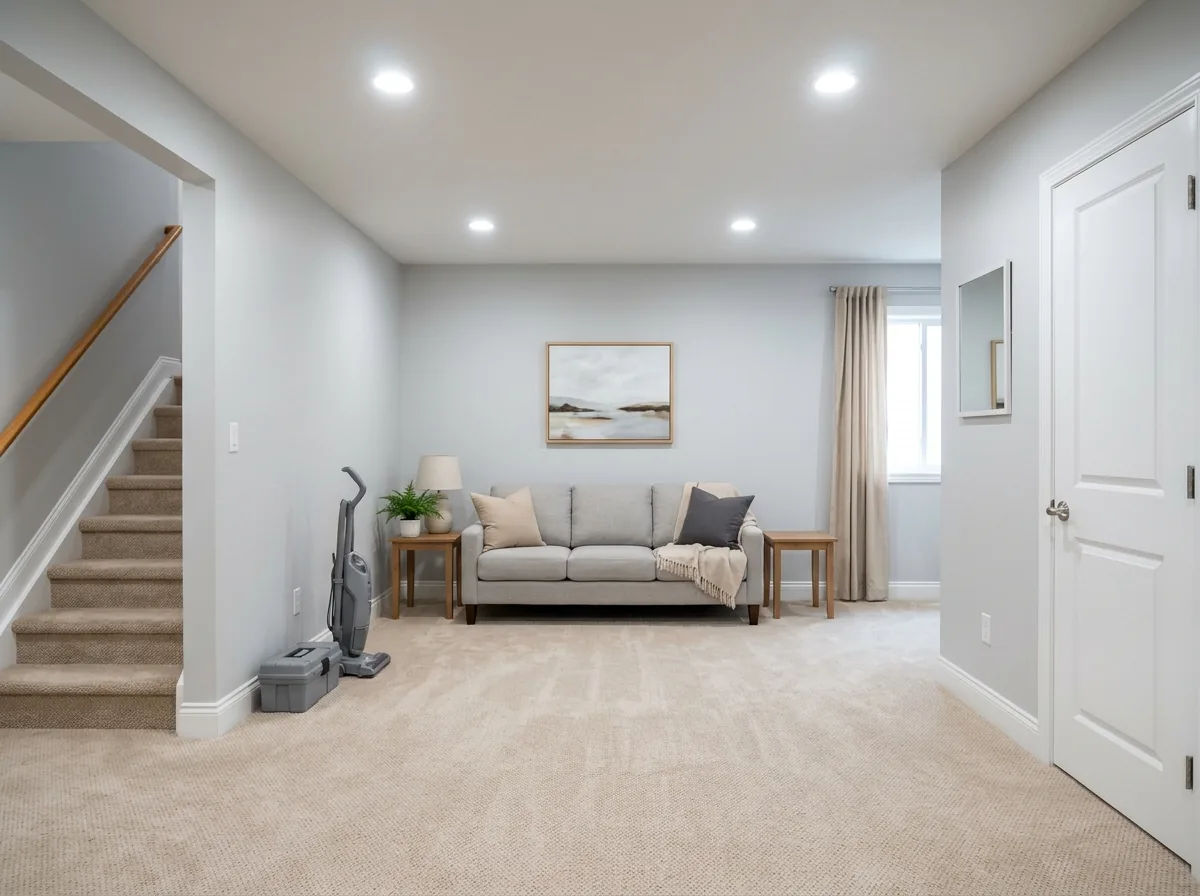
Surface Refresh Without Structural Changes
Not every renovation needs a permit. If the walls, wiring and plumbing stay as they are, paint, tile and carpet alone are exempt, and SoCoBD doesn't license painters, flooring installers, trim carpenters or tile setters. Material costs for new floors are on the basement flooring page.
- Permit: none for paint, tile and carpet alone
- Licensing: those trades are exempt from SoCoBD registration
- Lead rule still applies to paid work that disturbs paint in pre-1978 homes beyond 6 sq ft per room
Why Pueblo homeowners call Pueblo Basement Finishing
- Free to call or send the form
- One local contractor gets your request, not a bidding list
- Ask for each trade and the permit fee as its own line
- Tie payments to passed inspections, the last one to the final
Basement Renovation Permits and Inspections with SoCoBD
The Southern Colorado Building Department (830 N Main St, 719-543-0002) issues permits for the City of Pueblo and Boone. Addresses in Pueblo West, Beulah, Avondale, Rye and Colorado City go to the Pueblo County Building Division instead.
When it's needed
SoCoBD lists adding a bathroom, finishing a basement and changing the floor plan as remodels that need a permitFee math
valuation = sq ft x $176 x 50%, then the fee table. A 1,000 sq ft remodel works out to about $699 before sub-permits (our arithmetic on the 2026 table). SoCoBD's own 280 sq ft example comes to $308.75Trade sub-permits
electrical, plumbing and mechanical each take a separate permit, at a $50 attachment feeSkipping the permit
work started without one pays a double fee. Reinspections cost $100Keeping it alive
a permit becomes void after 180 days without an inspectionWho can pull it
a homeowner permit is only for an owner (a person, not an LLC) whose primary residence it is. Rentals need a contractorWho can do it
contractors must be licensed or registered with SoCoBD. Residential general contractors hold a Building C license, which requires an ICC exam
Basement Renovation in Older Pueblo Homes: Lead, Liens and Payment
Most of Pueblo's housing went up before 1980, so many basement renovations fall under EPA's lead rule.
Lead-safe rule
paid work that disturbs paint in a pre-1978 home needs an EPA-certified firm. Minor work under 6 sq ft of paint per room inside is exempt, but demolition of painted surfaces never is. Homeowners working on their own home are generally exempt unless part of it is rentedLiens
a sub or supplier must serve a notice of intent at least 10 days before filing and file within 4 months of their last work (owner defense in the FAQ below).Payment
tie draws to passed inspections, collect lien waivers as you go, and pay the final amount after the final inspection
Describe what's down there now, when it was finished and what you want changed. The free request is the first call that reaches one local contractor who can walk the space with you.