
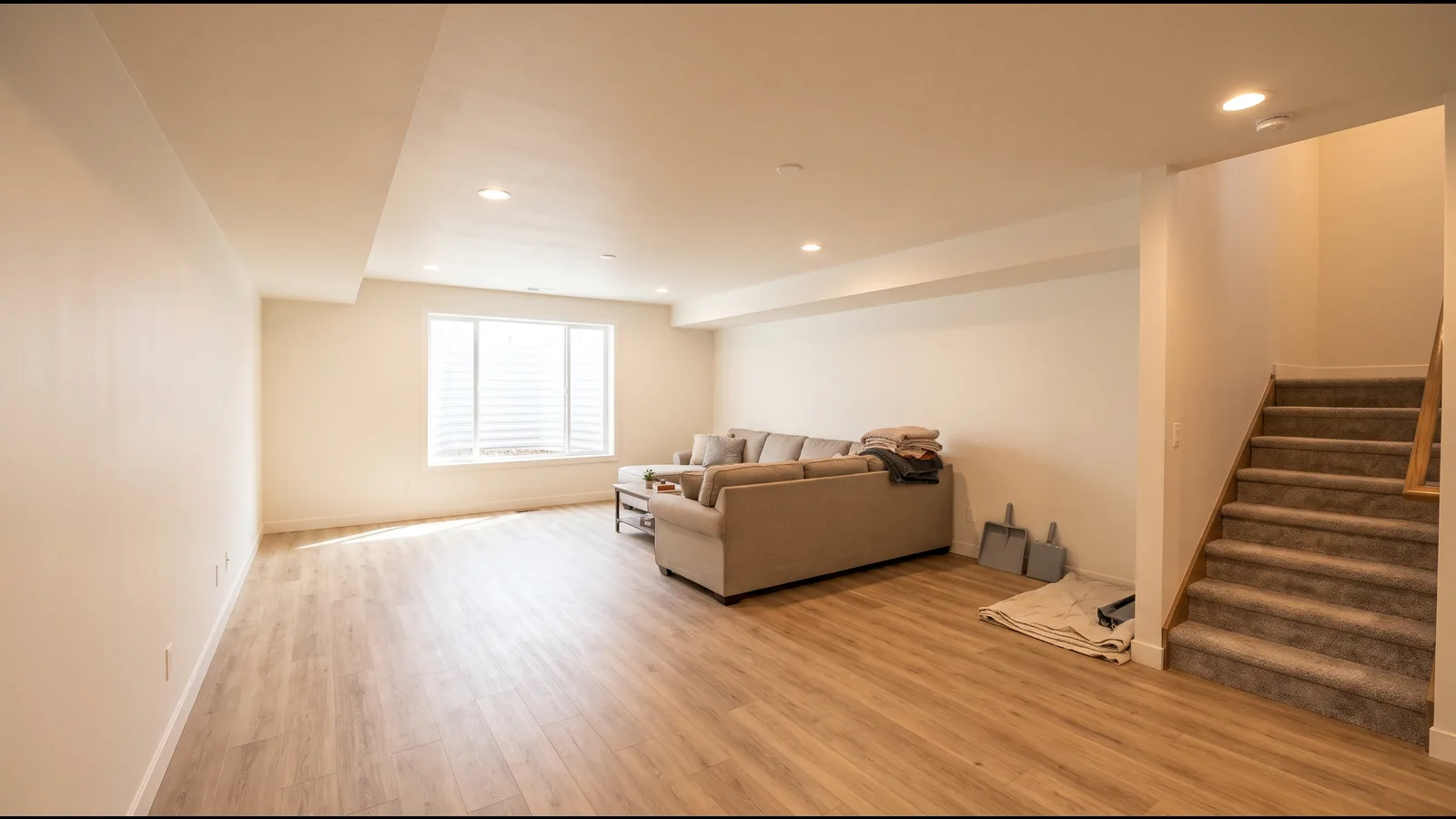
Basement Insulation Types for Pueblo Foundations
HomeGuide's finish-cost table puts insulation at $600 to $4,600 for a whole basement. The type decides how much wall depth it takes and whether the code's R-value comes from foam, the stud cavity or both.
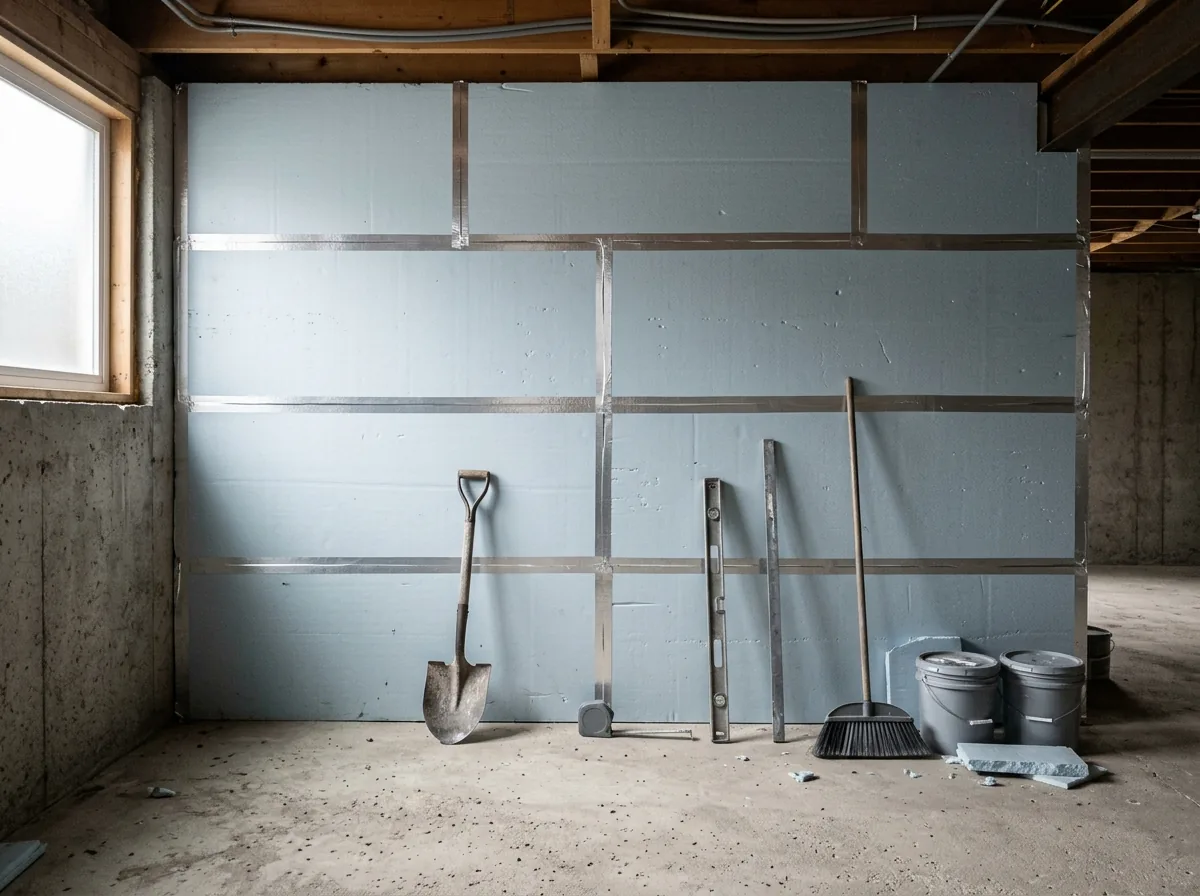
Rigid Foam Board on the Concrete
Foam board goes straight onto the foundation wall as continuous insulation, with no studs breaking it up. It can meet the code by itself at R-15, or add R-5 to a framed wall.
- Cost: $1.20 to $3.70 per board foot installed, in HomeGuide's figures.
- Cover: the 2021 IRC requires a thermal barrier over foam plastic, such as 1/2 in gypsum wallboard.
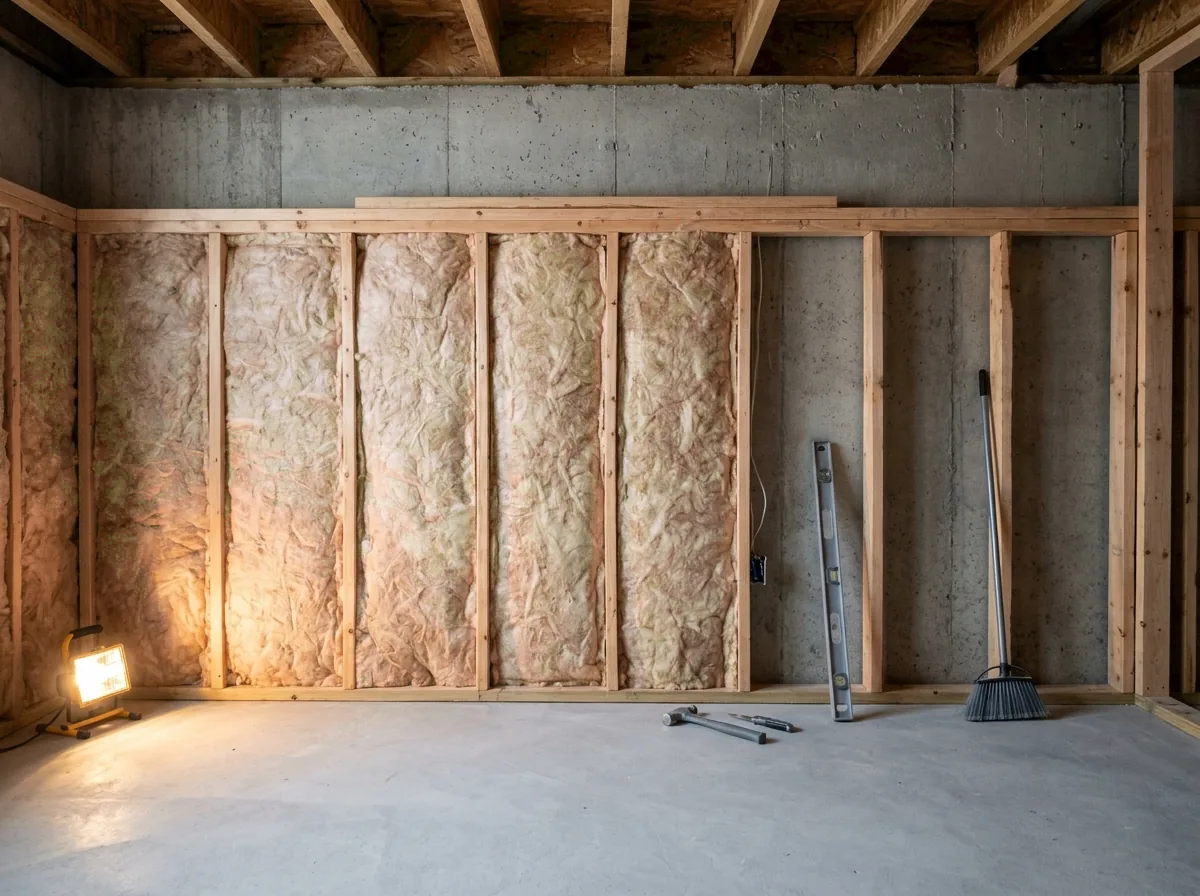
Batts in a Framed Wall
Batts fill the cavity of a stud wall built in front of the concrete (basement framing). On their own they need R-19, or R-13 with R-5 of foam behind the studs.
- Fiberglass: $1.00 to $2.60 per sq ft installed, and the budget option in HomeGuide's table.
- Mineral wool: $1.50 to $3.80 per sq ft, and HomeGuide notes it resists moisture and doesn't sag.
- Moisture: HomeGuide warns fiberglass can absorb moisture if it isn't protected, so settle the vapor question first (basement moisture control).
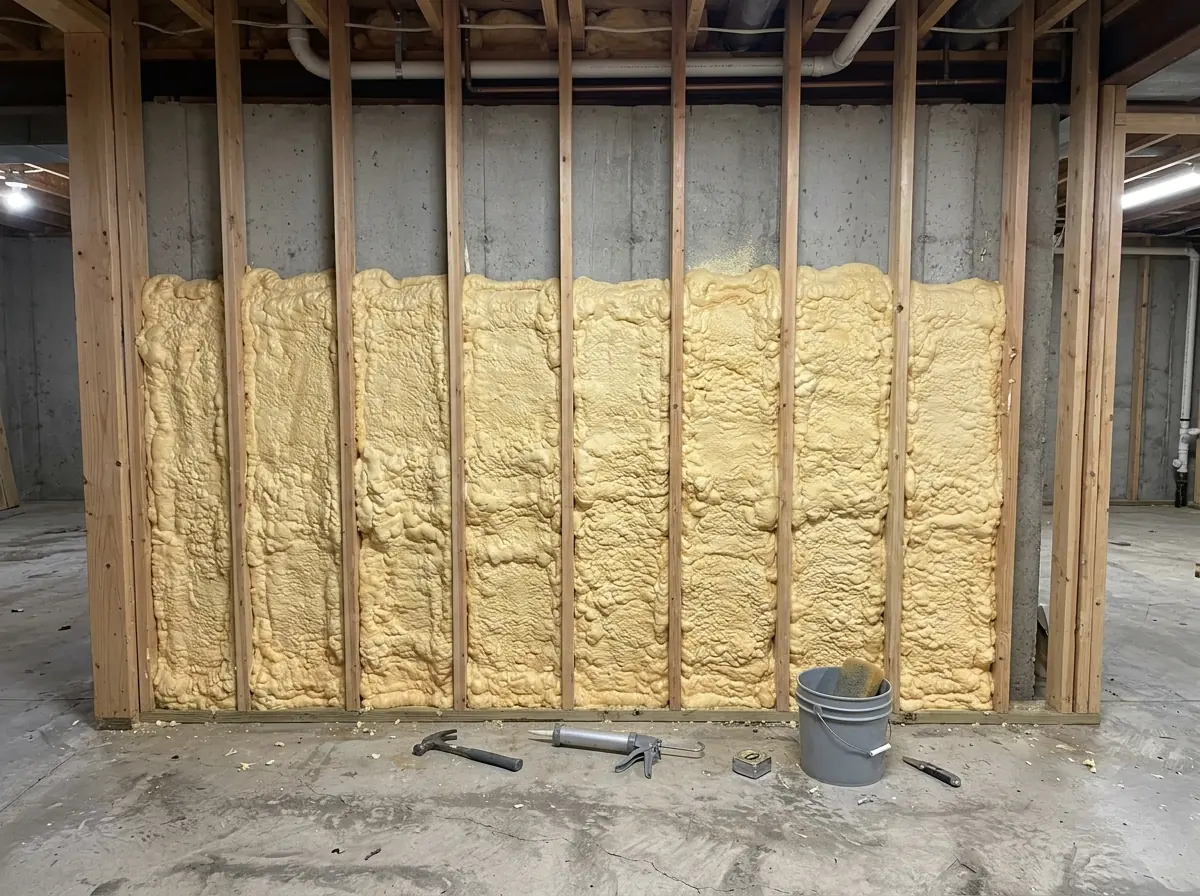
Spray Foam on Walls
Spray foam is the one type HomeGuide splits by cell structure, and the split decides where it fits.
- Cost: $1.50 to $5.00 per sq ft installed.
- Closed vs open cell: HomeGuide says closed-cell blocks air and moisture, while open-cell suits walls that will be drywalled.
- Cure: clear the sprayed area for 24 hours or more.
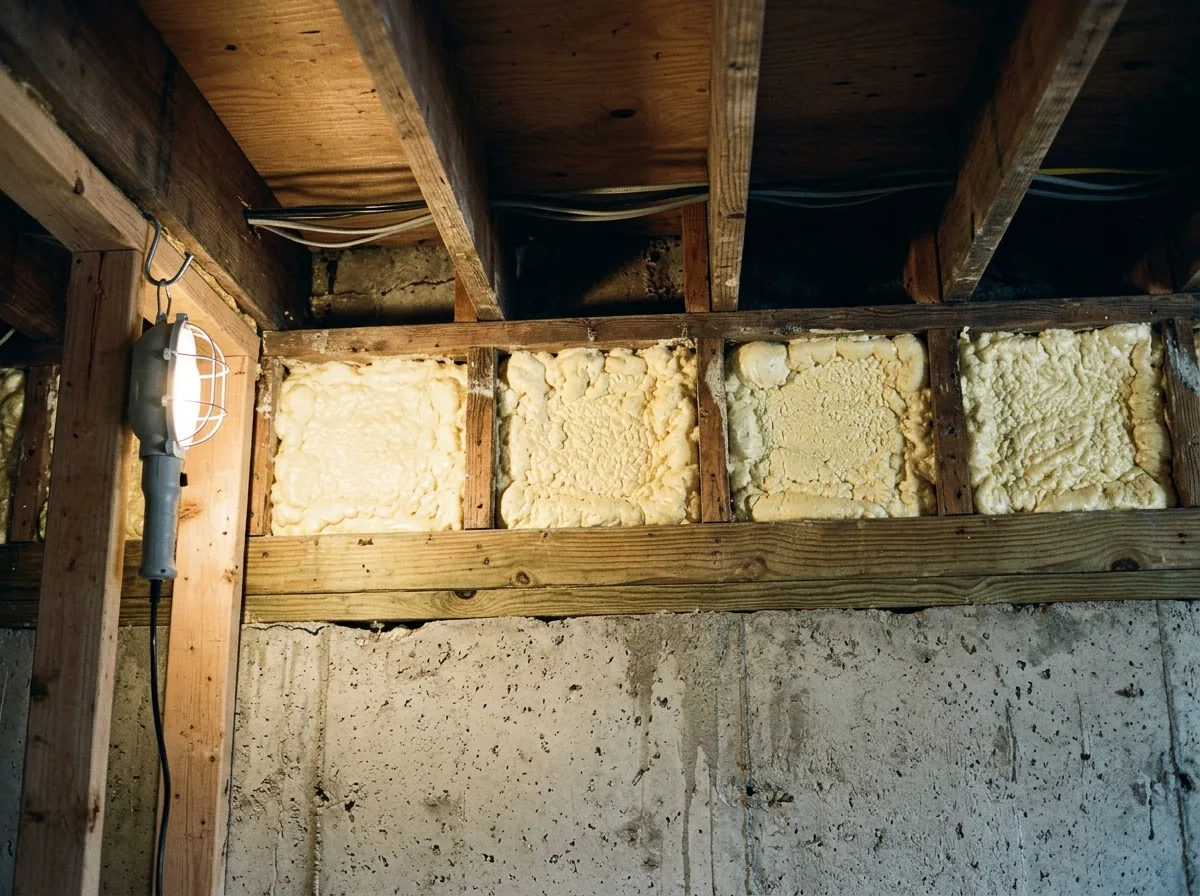
Rim Joist Insulation
The rim joist is the band of framing that sits on top of the foundation wall, between the floor joists. The energy code treats it as part of the air barrier, with its own insulation rule.
- Code: the 2021 IECC asks for insulation in permanent contact with the rim board, and air sealing where it meets the sill plate and the subfloor.
- Cost: HomeGuide lists spray foam on rim joists at $2,000 to $2,500.
- Timing: do it before a ceiling closes off the joist bays (basement ceilings).
Why Pueblo homeowners call Pueblo Basement Finishing
- Free to call or send the form
- One local contractor gets your request, not a bidding list
- Ask for each trade and the permit fee as its own line
- Tie payments to passed inspections, the last one to the final
Basement Insulation Code in Climate Zone 5B
The ICC's county table puts Pueblo County in climate zone 5B. The City of Pueblo adopted the 2021 IECC without modifications, effective June 30, 2026, and SoCoBD's prescriptive handout gives the zone 5 basement-wall line:
R-15 continuous
insulation on the interior or exterior of the wall, orR-19 cavity
insulation on the interior side, orR-13 cavity plus R-5 continuous
Under IECC R402.2.8, the insulation runs from the top of the basement wall down to 10 ft below grade or to the basement floor, whichever is less. The same handout lets you use these values in place of a REScheck energy calculation.
Basement Insulation Rebates and Moisture in Pueblo
Black Hills Energy has paid electric-customer rebates for this work. The 2025 figures we saw, in a search summary rather than on the form itself:
Basement sidewalls
$0.50 per sq ft, up to $250, at R-11 or higher.Rim joists
$1.00 per sq ft, up to $250, at R-13 or higher.Condition
the home needs central cooling to qualify.
Ask for the current form before the insulation goes in, and keep the R-value labels or invoice.
Pueblo's air is dry, but a slab and foundation still pass ground moisture. Whether a wall needs a vapor retarder, and on which side, depends on the insulation type and is covered on the moisture-control page linked above.