
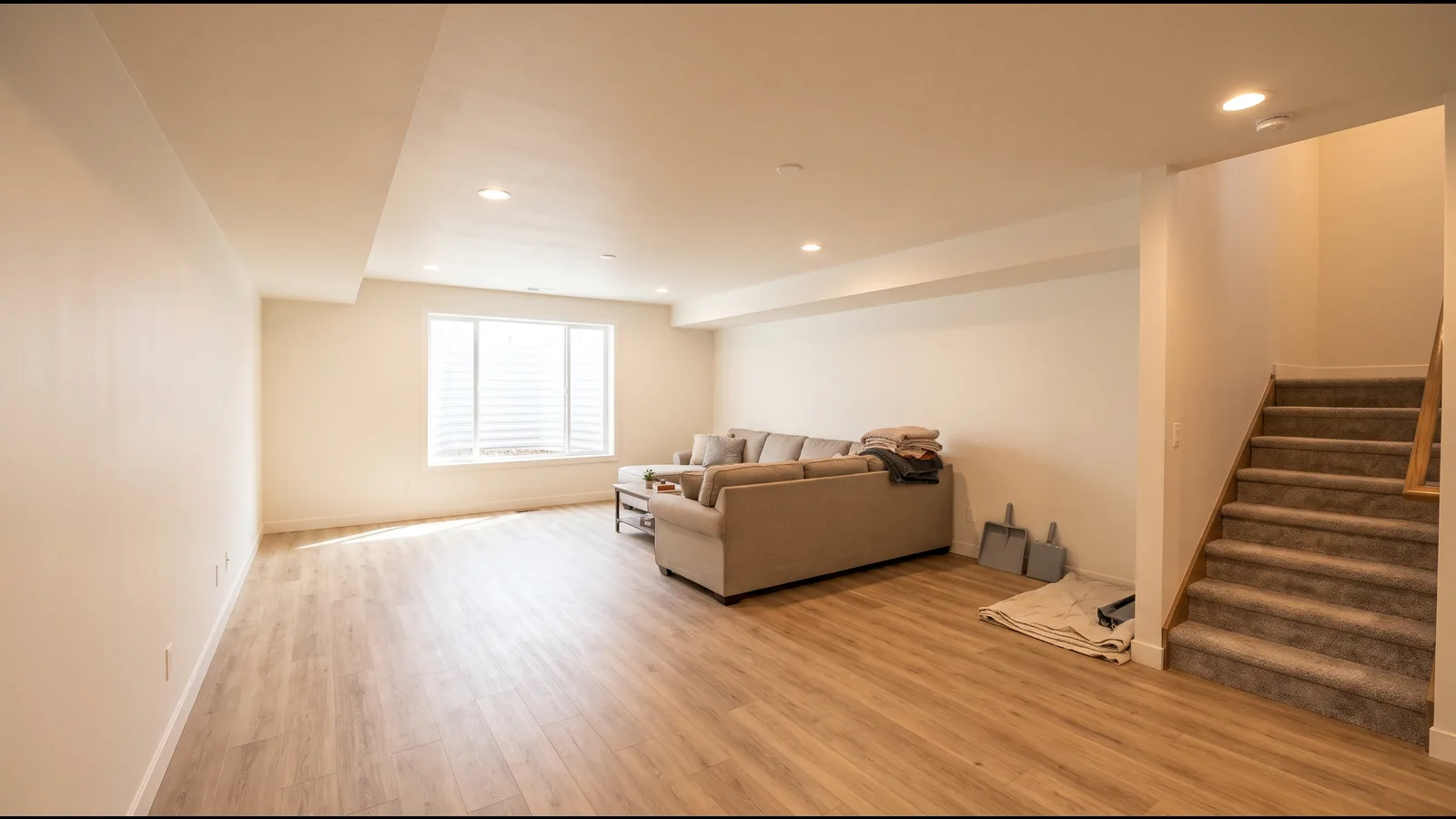
Basement Soundproofing Methods for Pueblo Homes
Most noise reaches a basement through the floor framing above it. In a typical house, Weyerhaeuser notes, the drywall is screwed straight to the joists with empty bays, which gives low ratings for both kinds of noise. Each method below fixes a different part of that.
Insulation in the Joist Bays
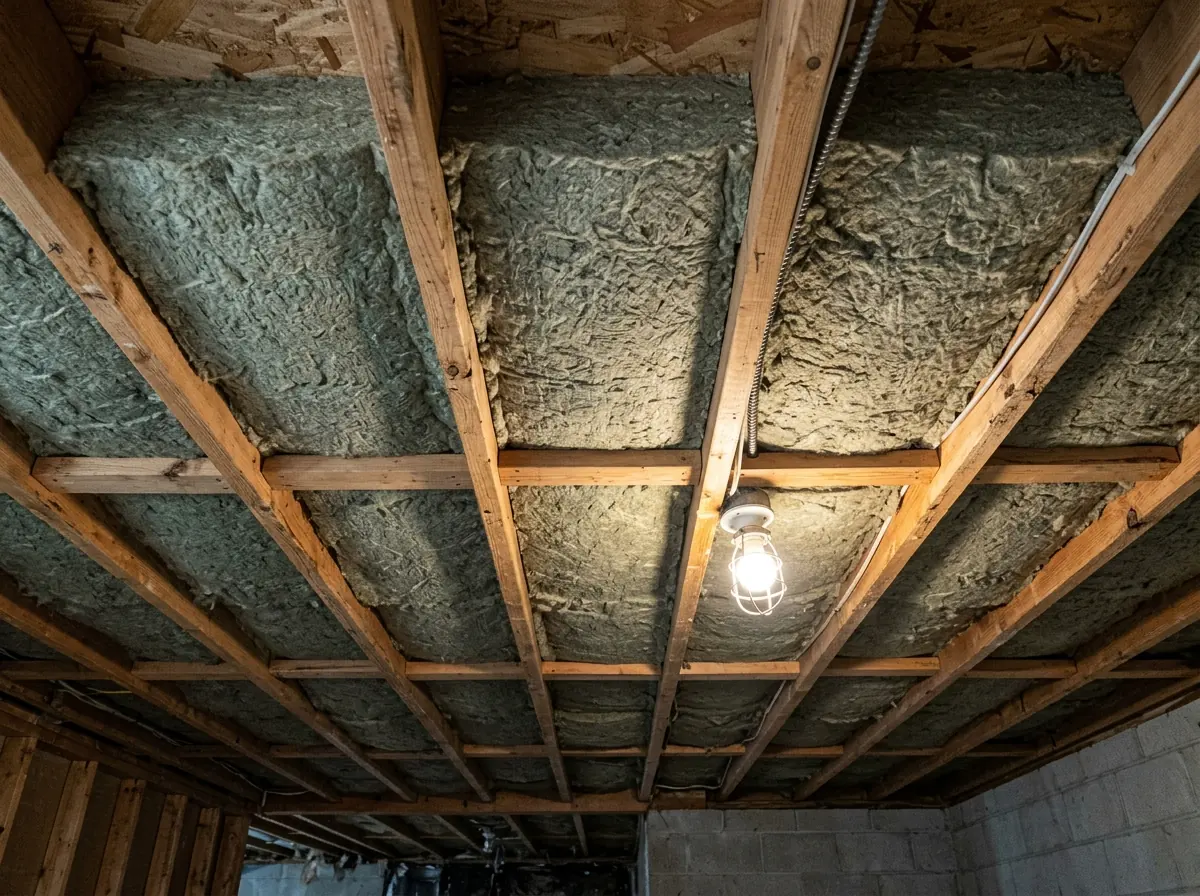
Filling the joist cavities with insulation is the simplest step. On its own it does less than people expect.
- Effect alone: about +5 STC and no IIC benefit (Weyerhaeuser).
- Cost: soundproof insulation runs $1 to $3 per square foot, and mineral wool batts $1 to $2 for walls (HomeAdvisor).
- Where it fits: paired with a resilient channel, below.
Resilient Channel Ceilings
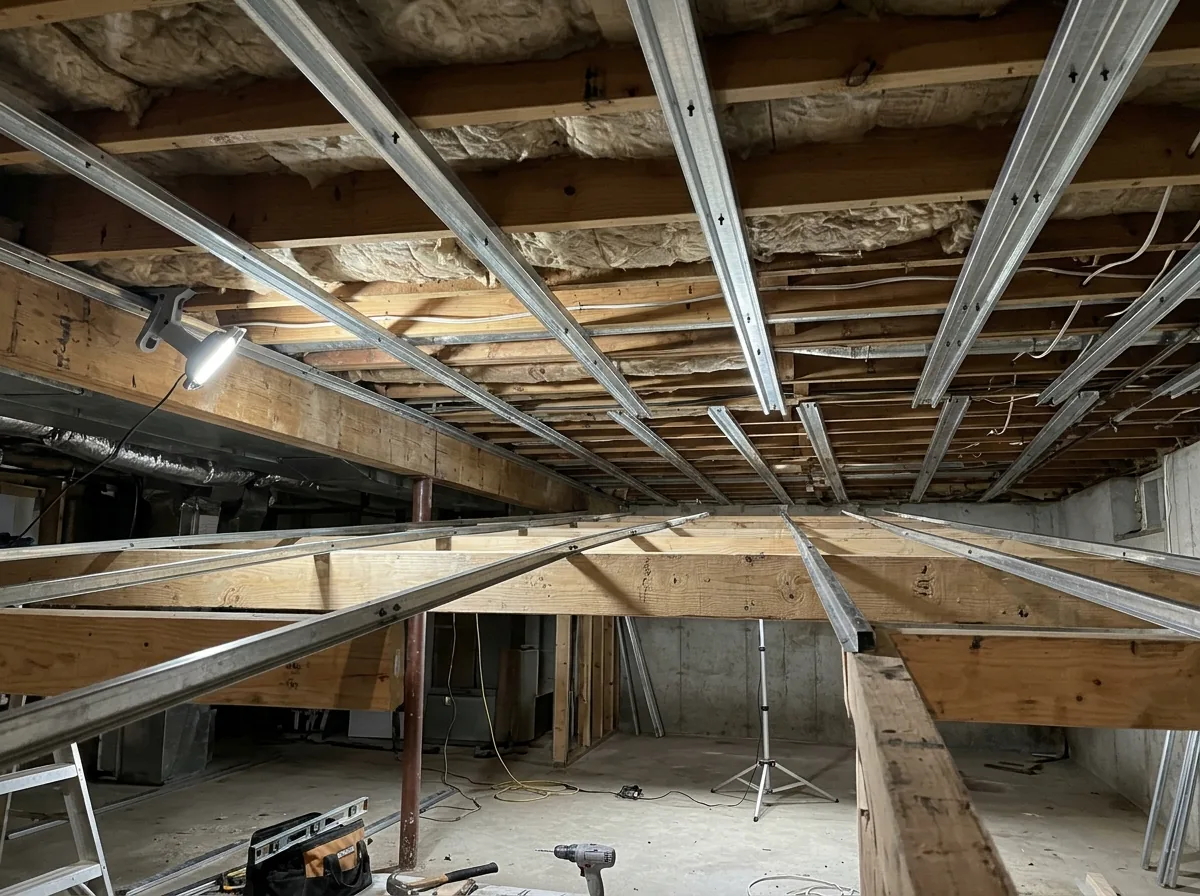
A resilient channel is a thin metal strip that holds the drywall slightly away from the joists, so sound has no solid path through. Weyerhaeuser's figures show it adds about 10 points to both STC and IIC alone, and more than the two separate gains together when the bays are also insulated.
- Right product: single-leg resilient channel. Hat channel is solid and doesn't decouple.
- Installation traps: screws long enough to hit the joist "short-circuit" the channel and can cut the STC rating by as much as 20%. Channel fastened over sheathing can lose most of its effect.
- Cost: about $150 to $200 per wall; ceilings run $5 to $20 per square foot (HomeAdvisor).
- Head room: every layer under the joists lowers the finished ceiling, so check the basement ceiling height rules first.
Added Mass: Double Drywall and Mass-Loaded Vinyl
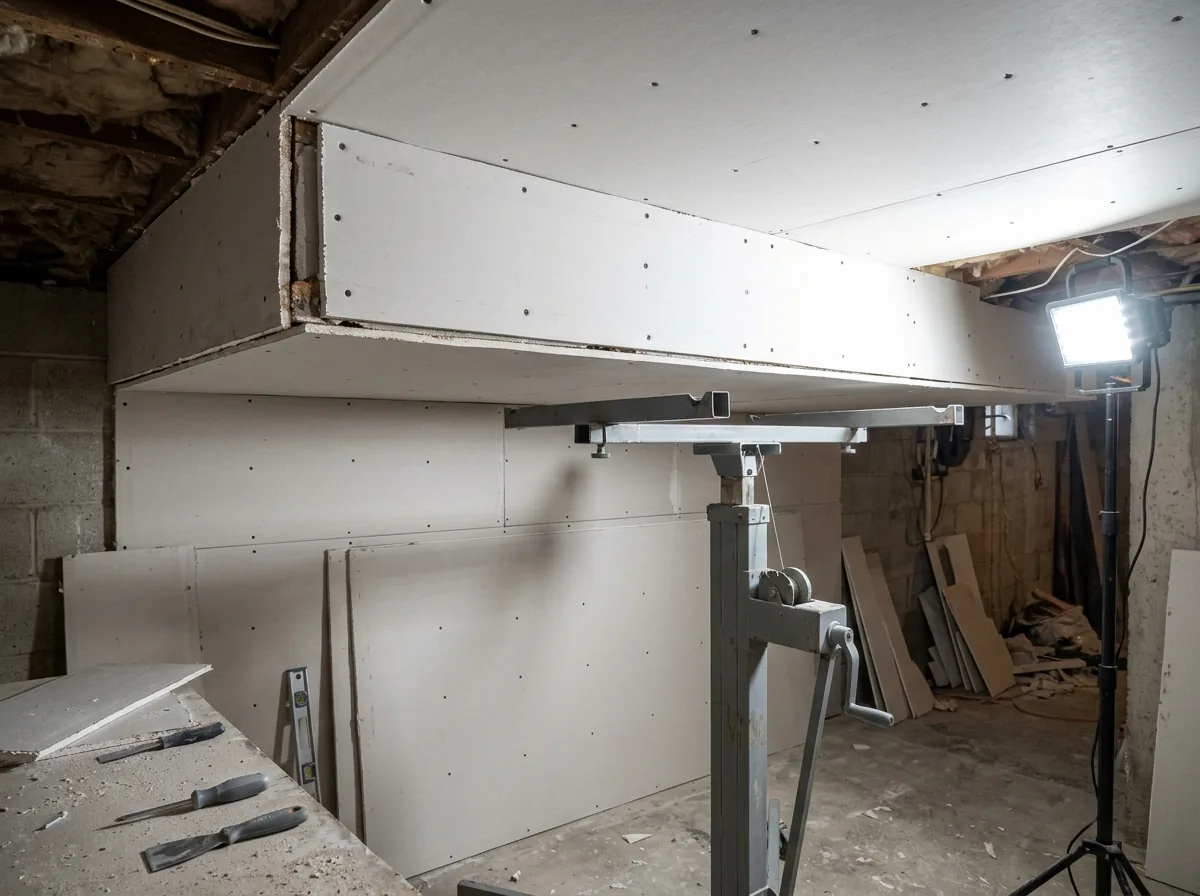
Heavier ceilings block more airborne sound. Weyerhaeuser notes that the ratings expected in apartment buildings, STC and IIC above 50, usually take special detailing and a lot of mass.
- Soundproof or double drywall: $40 to $60 per panel (HomeAdvisor).
- Mass-loaded vinyl: $3 to $5 per square foot on ceilings.
- Where it pays: under a media room or a bedroom; see basement home theaters.
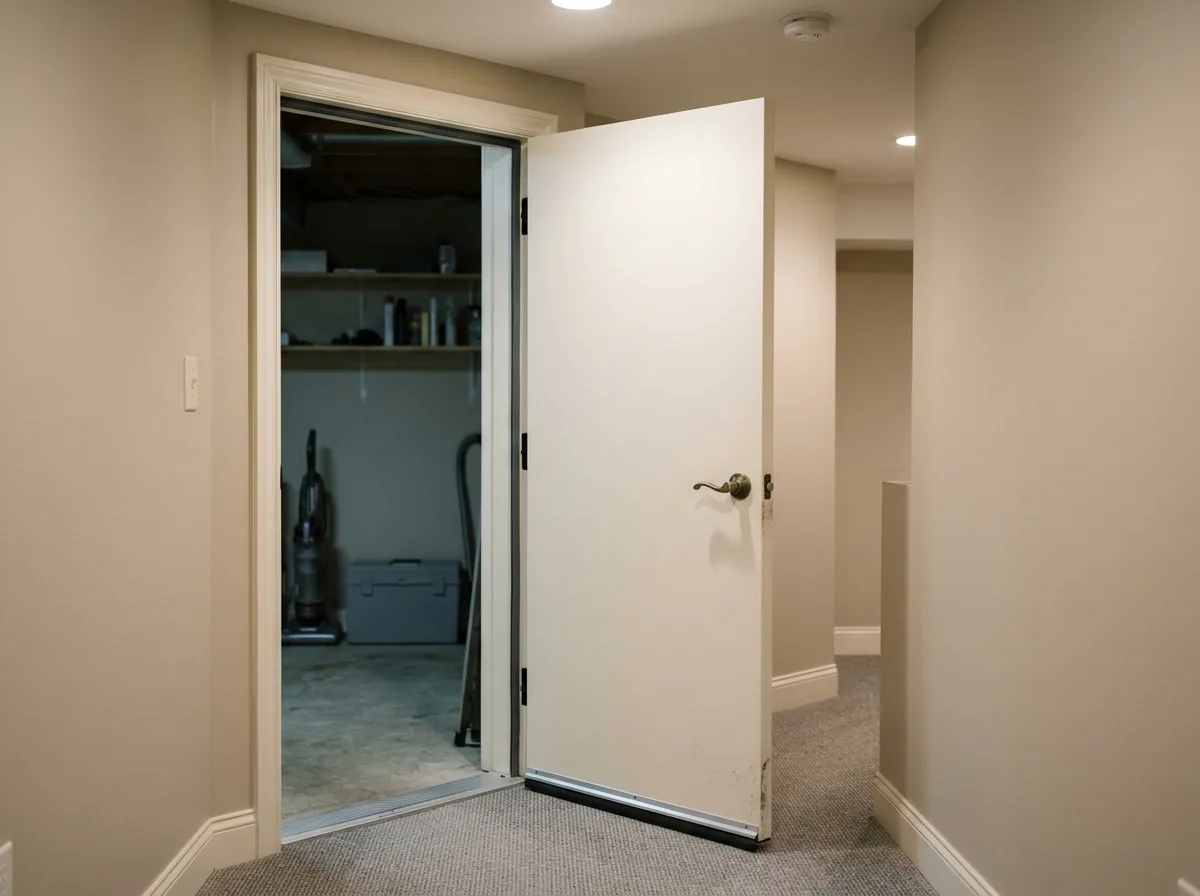
Doors, Ducts and Flanking Paths
Flanking noise goes around the ceiling instead of through it. Weyerhaeuser names joist spaces that run unbroken over partition walls, ducts that aren't isolated, and outlets set back to back.
- Solid-core door: $500 to $1,600; a soundproof threshold $30 to $100 and door sealant $40 to $100 (HomeAdvisor).
- Ducts and outlets: ask for staggered outlet boxes and a duct layout that doesn't open one room straight into the next (basement lighting and wiring).
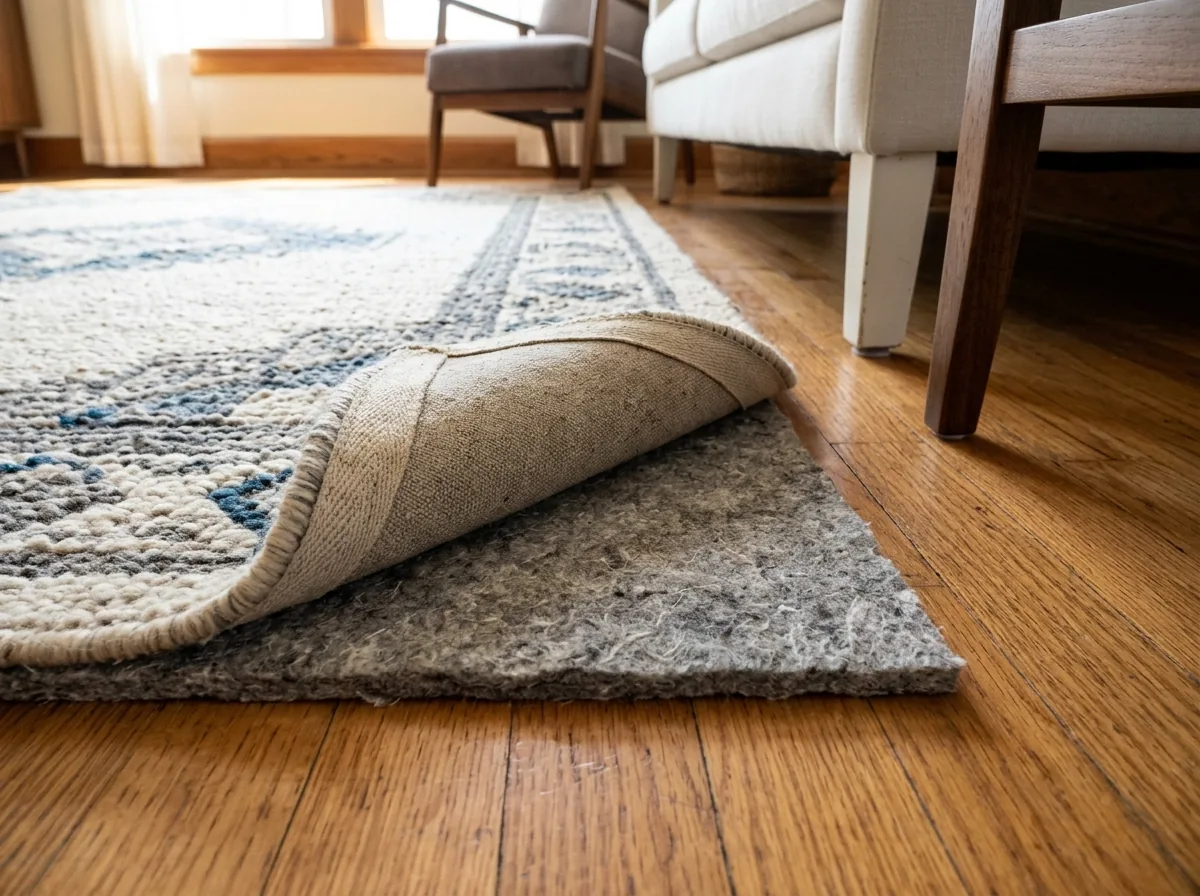
Floor Coverings Upstairs
For footsteps, the surface above often counts more than the ceiling below. Weyerhaeuser's findings:
- Carpet and pad: the most effective way to raise IIC.
- Tile directly on a wood subfloor: lowers IIC by 10 to 15 points.
- Thick cushioned vinyl: improves IIC by less than 5 points; a thin rubber mat under tile or floating floors does about the same.
- Ratings: finished flooring usually leaves STC unchanged.
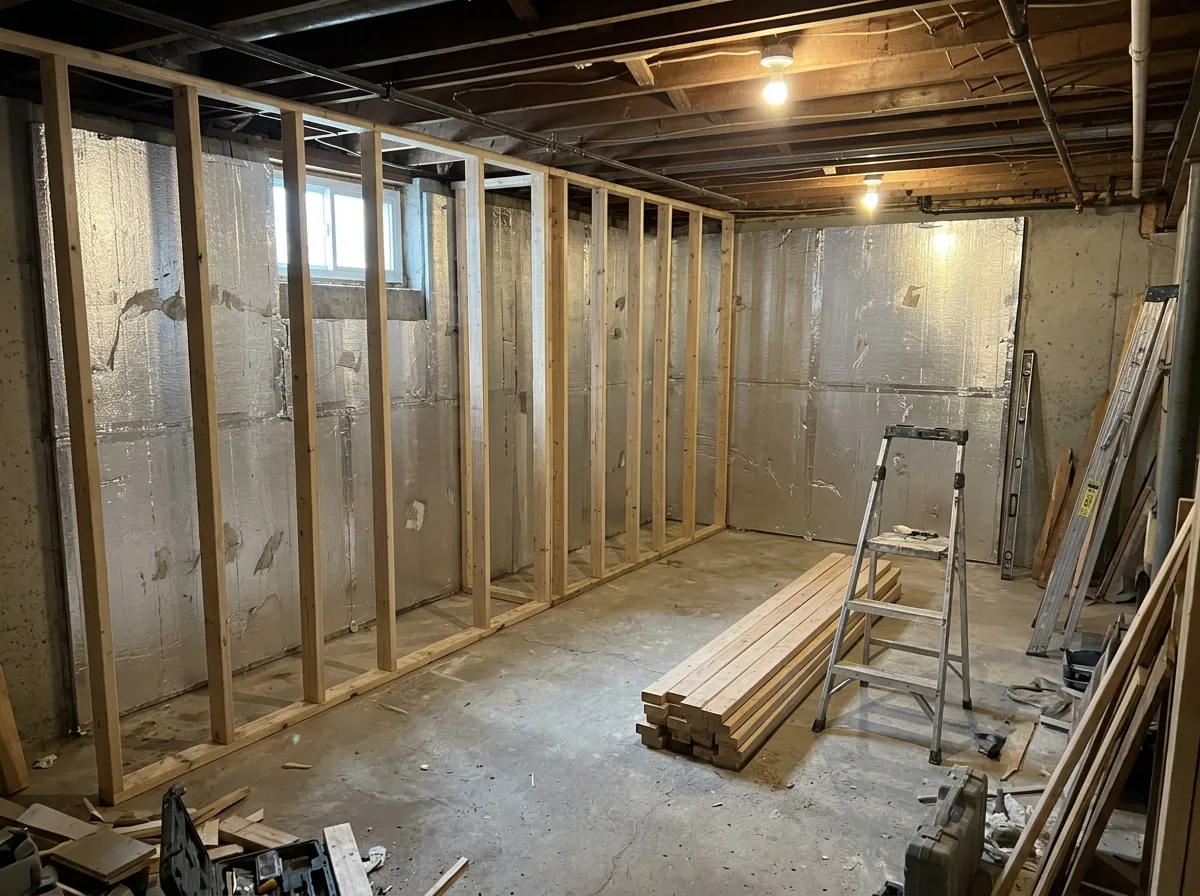
Why Pueblo homeowners call Pueblo Basement Finishing
- Free to call or send the form
- One local contractor gets your request, not a bidding list
- Ask for each trade and the permit fee as its own line
- Tie payments to passed inspections, the last one to the final
Basement Soundproofing Ratings: STC and IIC
STC (Sound Transmission Class)
airborne sound such as voices and music. Higher is better.IIC (Impact Insulation Class)
footfalls and impacts. About 30 is typical for a single-family floor with hardwood or vinyl; below 30 is poor; 50 and up is the level expected in multifamily buildings (Weyerhaeuser).Rental units
if the basement will be a separate unit, ask SoCoBD which separation rules apply before the ceiling is designed (basement apartments).
Basement Soundproofing Costs and Timing
HomeAdvisor's national figures:
One room
$1,036 to $2,743, average $1,881; as little as $500 or as much as $5,200.Basement
$300 to $2,000, partly because the surrounding earth already blocks outside noise.Home theater
$1,000 to $10,000.
Sound work fits into the ceiling stage of a finish: after the rough-in inspection, before drywall. That is why it costs about half as much as a retrofit. The full job sits inside the whole-basement timeline on the homepage.
Tell us which rooms sit above the basement and what noise bothers you, and the contractor can price the ceiling to match. Ask for the channel type and the insulation listed by name in the written scope.