
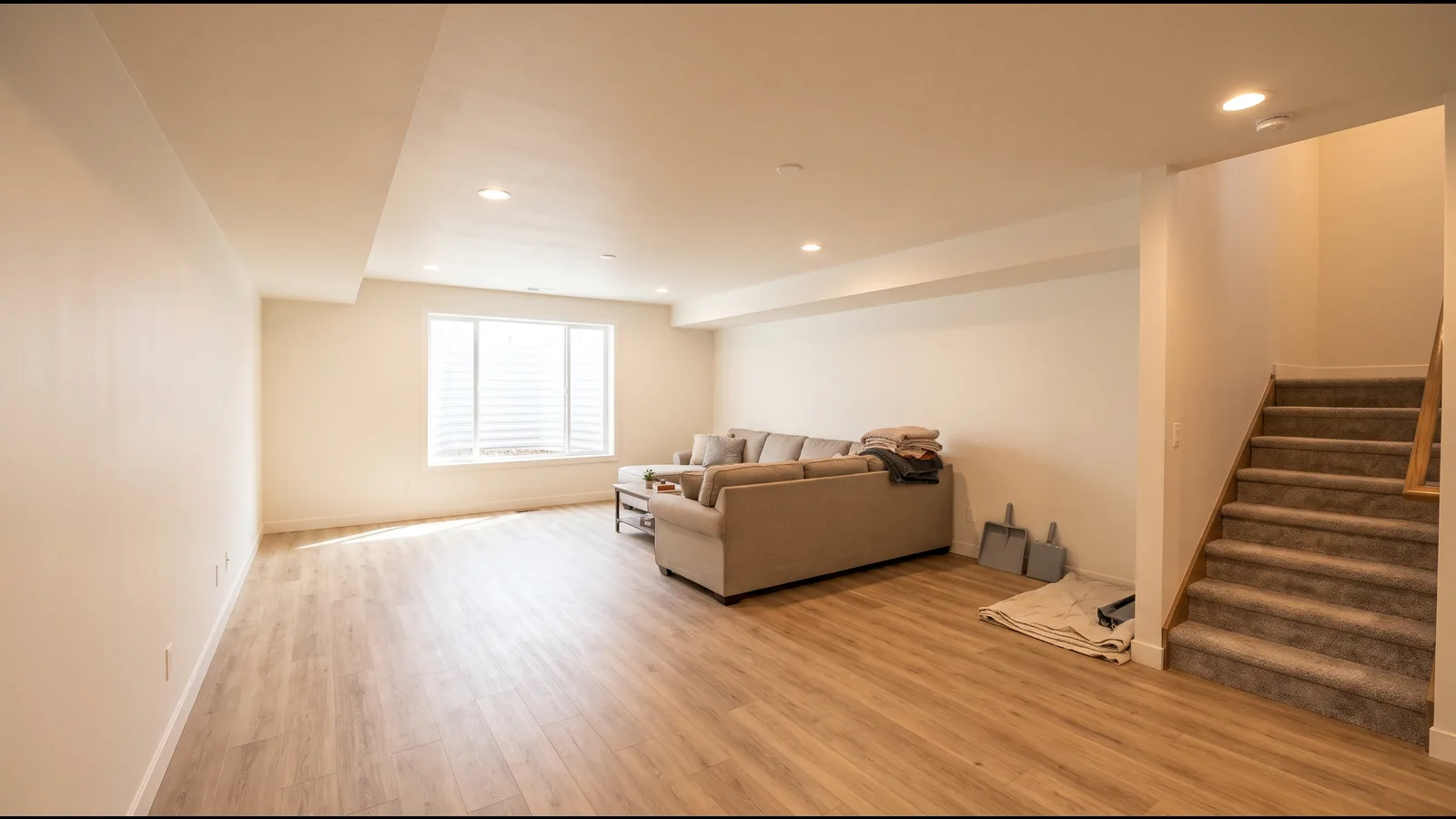
Basement Moisture Control Methods Before You Finish
A finish puts insulation, wood and drywall against concrete that is in contact with the ground. These five steps decide whether that concrete can stay dry behind the new walls.
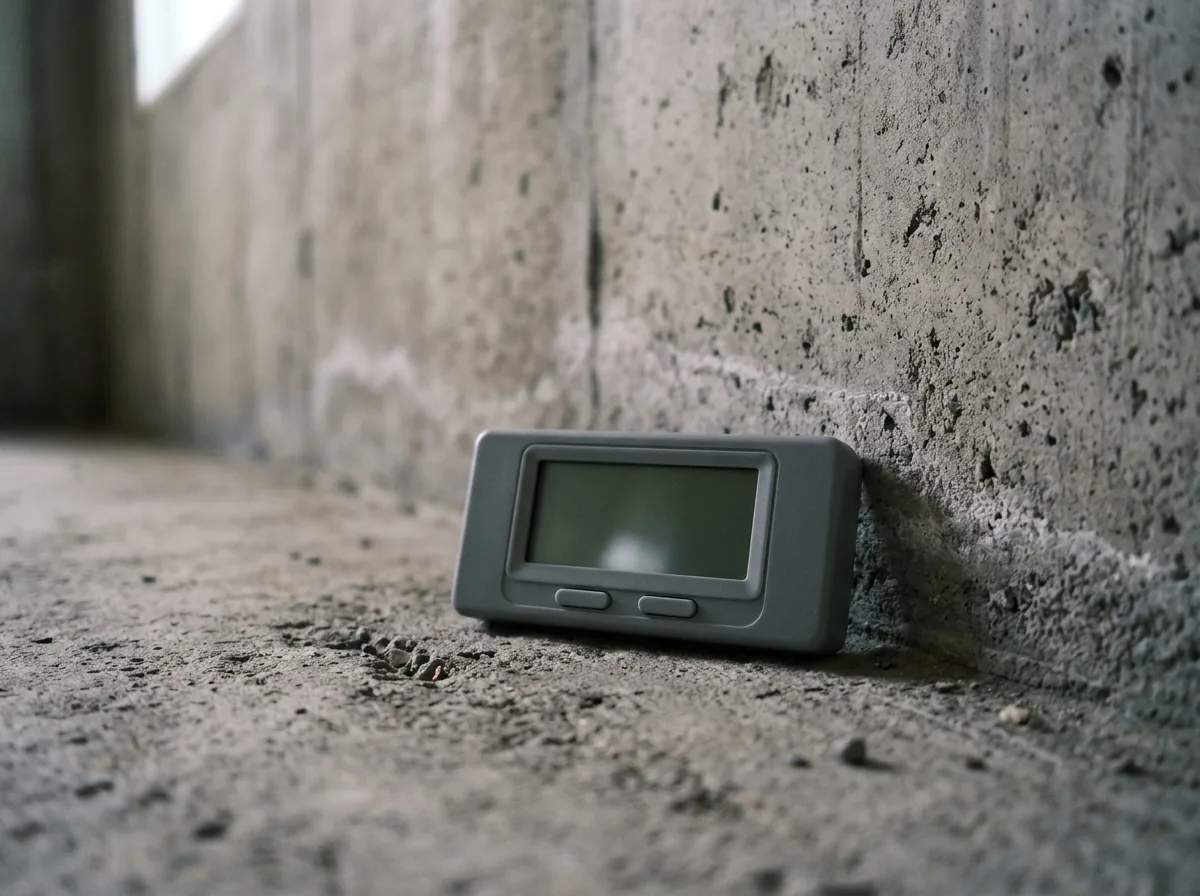
Pre-Finish Moisture Checks
Before anything gets covered, look at the basement after wet weather as well as dry. Pueblo's 1991-2020 normals show 12.02 inches of precipitation and about 31 days a year with at least a tenth of an inch, so the wet days are few and easy to miss.
- Humidity reading: EPA notes a meter costs $10 to $50 at a hardware store. Readings over 60% mean the room needs drying before it is closed in.
- Outside the wall: EPA advises ground that slopes away from the foundation and gutters that are kept clean.
- After a spill or leak: EPA says drying wet materials within 24 to 48 hours usually stops mold from growing.
- Sewer line: check the backwater valve too (basement bathroom drains).
Foam-Based Wall Assemblies
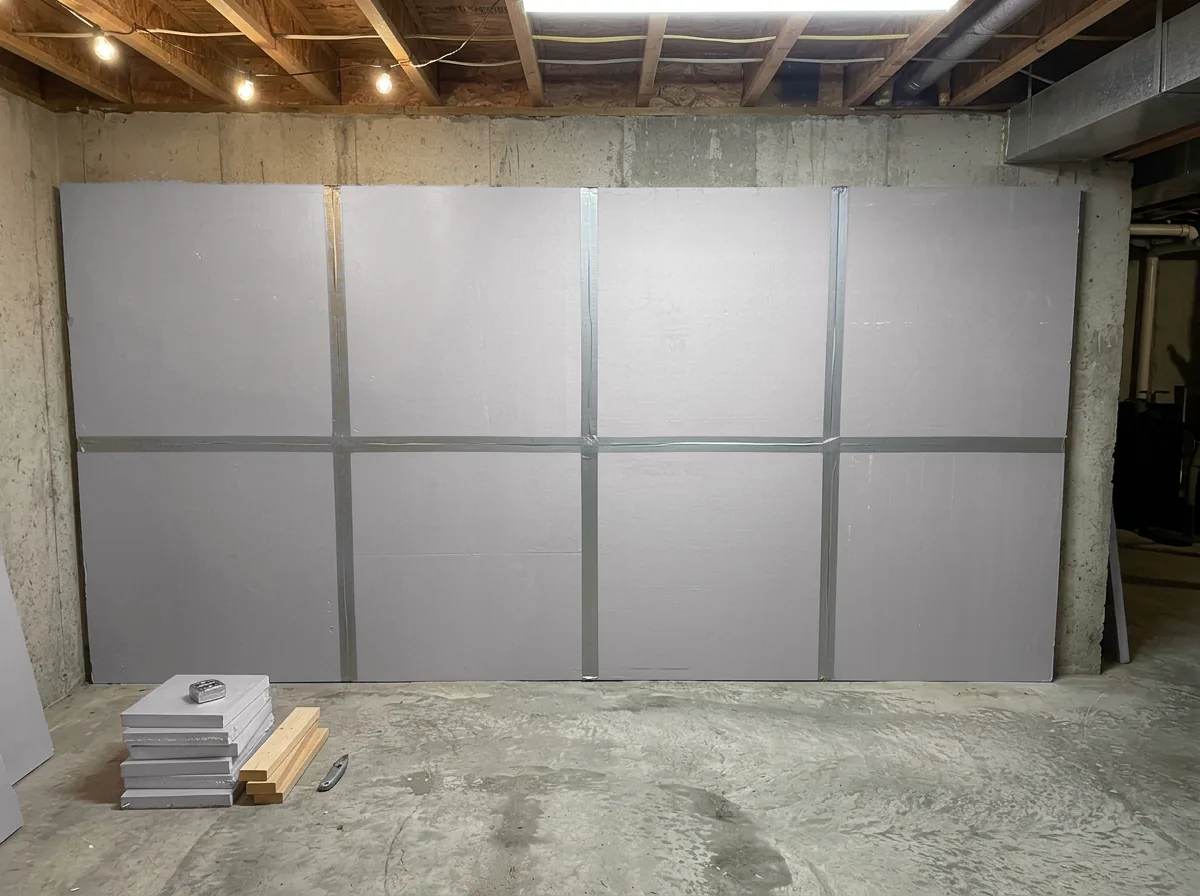
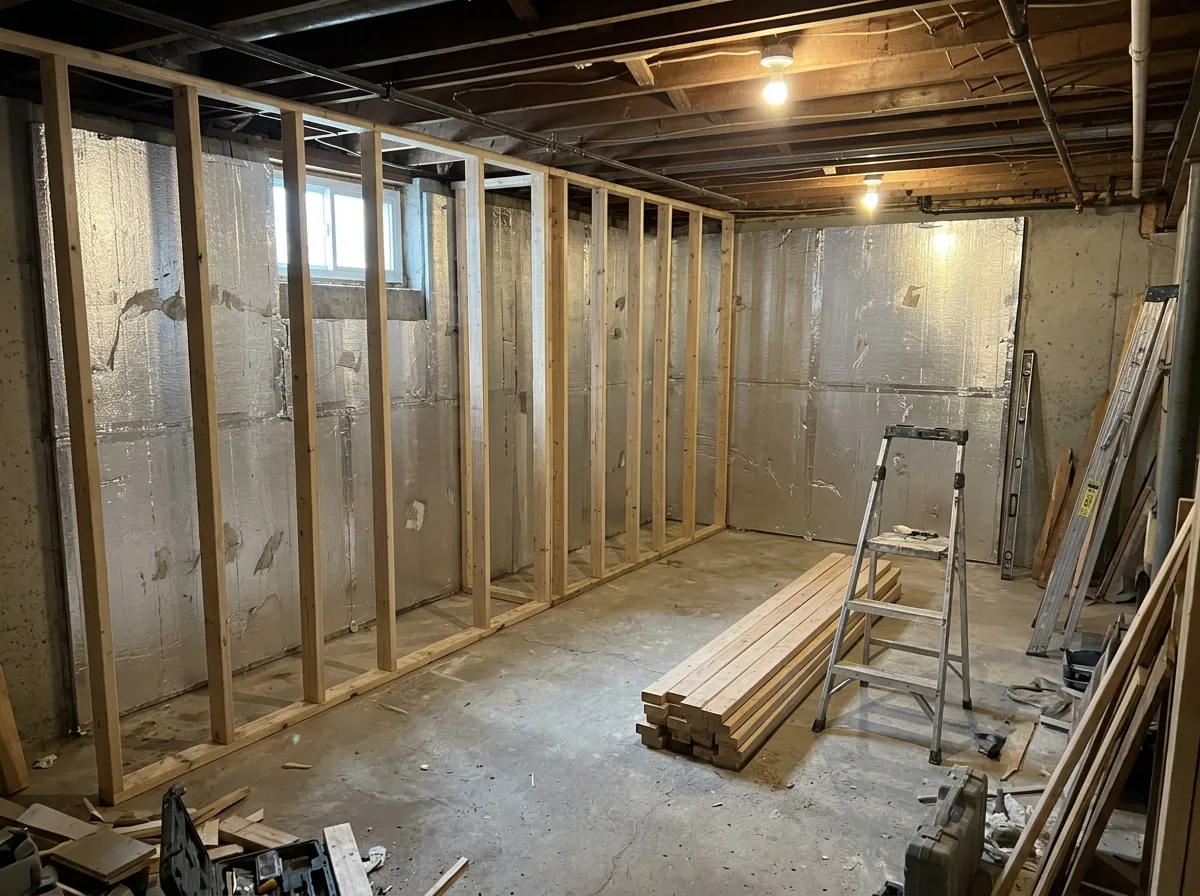
Building Science Corporation (BSC) advises basement walls insulated with foam that doesn't absorb water and keeps room air off the cold concrete. Its most cost-effective version is rigid foam on the concrete with an insulated frame wall inside it.
- Foam thicknesses BSC lists as able to dry inward: up to 2 inches of unfaced extruded polystyrene (R-10), 4 inches of unfaced expanded polystyrene (R-15), or 3 inches of closed-cell spray foam (R-18).
- What to avoid: BSC reports that a framed, insulated wall covered with an interior plastic vapor barrier often leads to odor, mold, decay and corrosion.
- Code: the 2021 IRC's interior vapor-retarder rule for climate zone 5 exempts basement walls and the below-grade part of any wall. Code R-values are on the basement insulation page.
Rim Joist Sealing
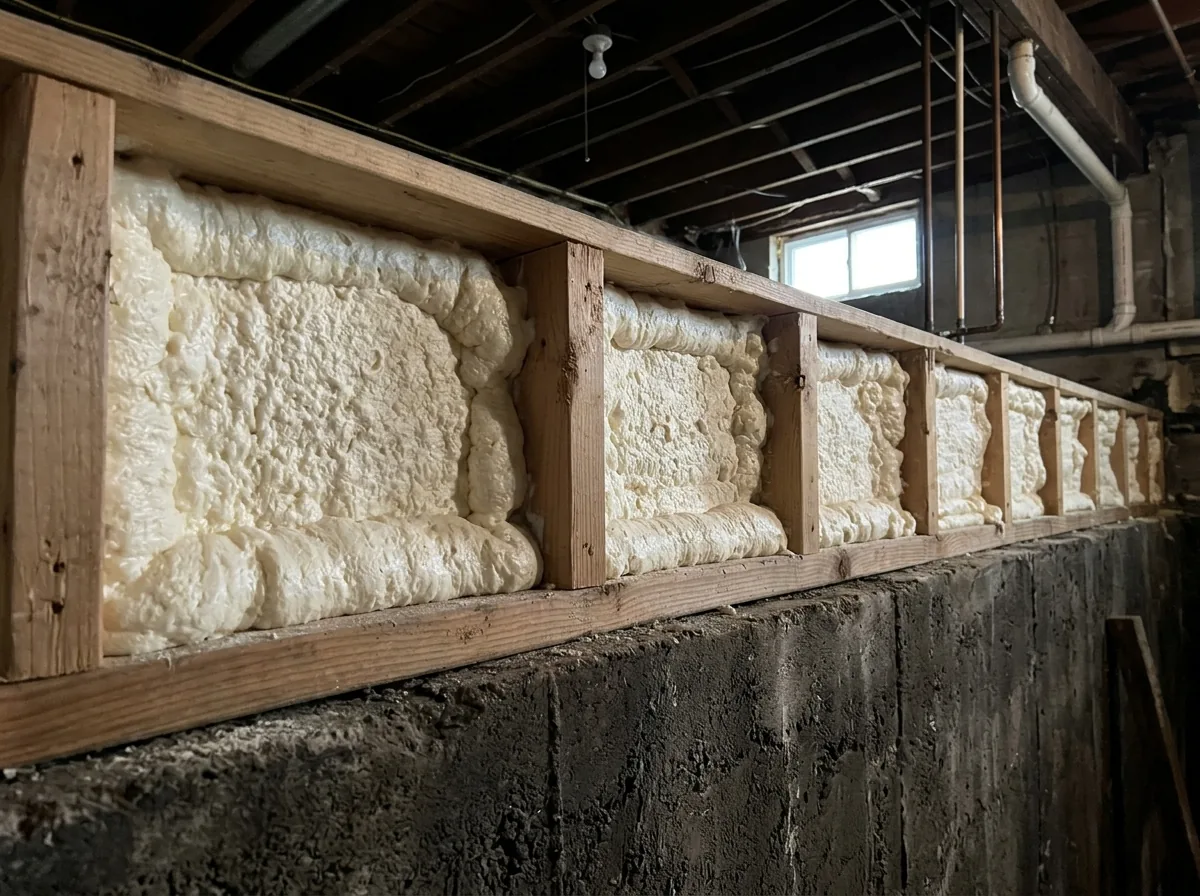
The rim joist is the wood band sitting on top of the foundation wall, and BSC names it with the concrete as the cold surface room air must be kept off. Closed-cell spray foam or cut-and-sealed foam board between the joists does that.
- Fire cover: BSC notes spray foam must be covered with a fire or ignition barrier.
Slab and Floor Moisture
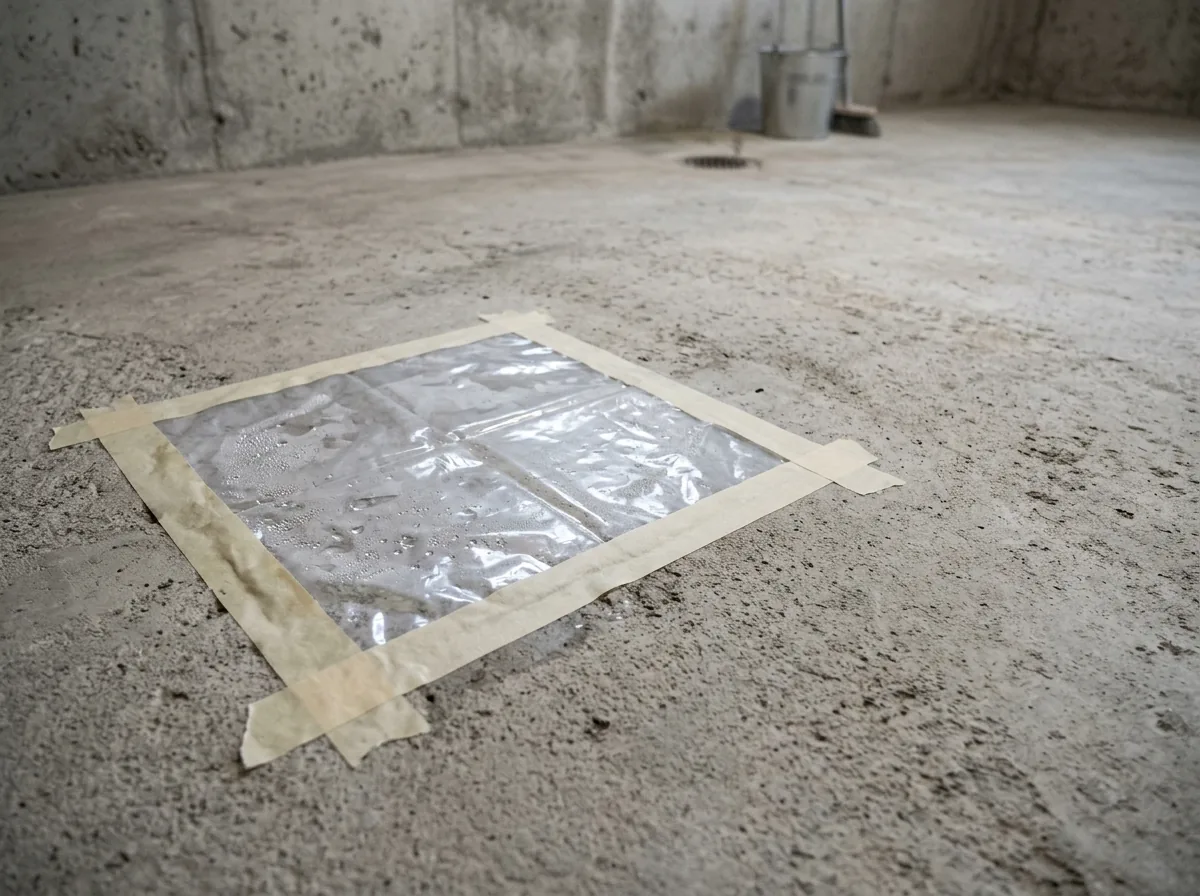
BSC calls for a capillary break of crushed stone and a polyethylene vapor barrier in direct contact with the underside of a basement slab. A Pueblo house built around the city's median year of 1965 may or may not have that layer, and it can't be seen from above.
- Ask before choosing flooring: how the contractor will check the slab, and which floors tolerate it (basement flooring).
- Plastic sheet classes: the IRC rates sheet polyethylene as a Class I vapor retarder (0.1 perm or less), kraft-faced batts as Class II, and latex paint as Class III.
Basement Dehumidifiers
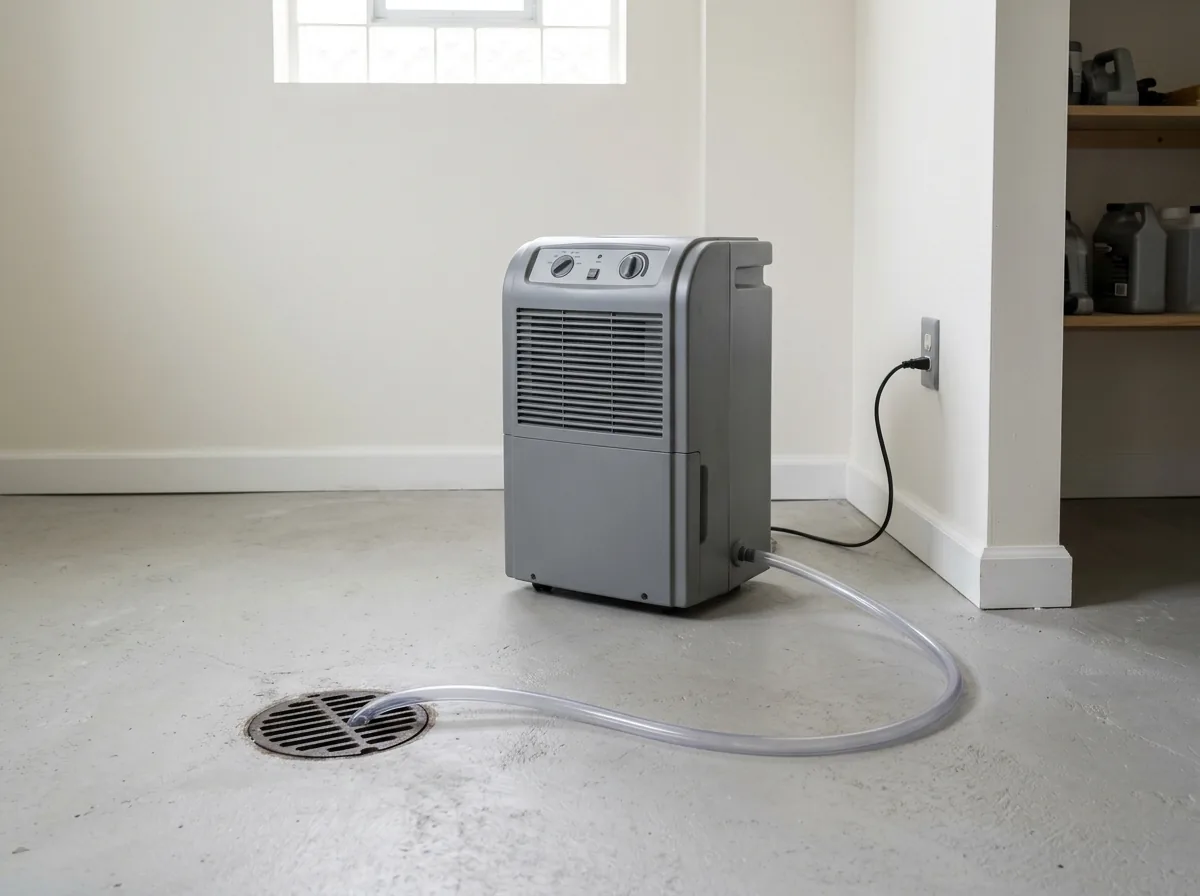
A dehumidifier holds the finished space in EPA's 30% to 50% range. HomeGuide's figures:
- Portable unit: $250 to $450, no installation.
- Large-capacity basement unit (50-65 pints): $1,000 to $3,000 installed; a permanent basement system runs $1,100 to $2,800.
- Whole-house unit (70-200+ pints): $1,500 to $3,500, tied into the ductwork.
- Running cost: $10 to $30 a month.
- Fit for basements: a model built to run below 65 degrees, draining by gravity to a floor drain or sump.
Why Pueblo homeowners call Pueblo Basement Finishing
- Free to call or send the form
- One local contractor gets your request, not a bidding list
- Ask for each trade and the permit fee as its own line
- Tie payments to passed inspections, the last one to the final
Basement Moisture Control Costs and Timeline
Humidity meter
$10 to $50 (EPA).Dehumidifier
$1,100 to $2,800 for a permanent basement unit, three to six hours to install (HomeGuide).Foam and insulation
priced per square foot on the insulation page.Waterproofing, for comparison
$6,000 to $18,000 (HomeGuide). That is a separate trade, covered below.
Moisture prep fits between demolition or cleanout and framing. Rough-in work is inspected before insulation and drywall cover it, so settle the wall assembly before the permit drawings (how SoCoBD permits work).
Basement Moisture Problems That Go to a Waterproofing Contractor
This page covers getting a basement that's dry or merely damp ready to finish. Water that runs in during storms, standing water, a failed or missing sump, drain tile and foundation cracks that keep moving belong to waterproofing and foundation firms, and should be fixed before any finishing.
Pueblo has one more reason to handle water at the source. The Colorado Geological Survey says the area's swelling clays can expand up to 20% by volume when they get wet, so downspouts and grading that dump water at the wall matter for the slab as well as the drywall (framing on swelling soils).
Send photos of the walls, the floor and any staining, and we'll pass them to the contractor. Ask for the wall assembly and the dehumidifier listed in the scope, and ask who to call if the walk-through finds active water.